The Italian Game: How to Play It Against Real 1000 to 1600 Opponents
TL;DR: the data
Built from 131 million Lichess games played by 1000 to 1600 rated players You play White, 20 practice lines, every move of yours checked by Stockfish Most common line 1. e4 e5 2. Nf3 Nc6 3. Bc4 Nf6 4. d3 Bc5 5. O-O O-O 6. c3 d6 7. h3 Replies to 3.Bc4 3...Nf6 32% · 3...Bc5 28% · 3...h6 18% Worth knowing About 26% of 1000-1600 rated players fall for the Blackburne Shilling trap (3...Nd4 4.Nxe5??), and they lose 75% of those games.
The Italian Game is the opening most of us learn first, and for good reason. You put a pawn in the center, bring out a knight, and point your bishop at f7, the one square in Black's camp that only the king defends.
Most guides teach it from games between masters. This one doesn't. We looked at 131 million Lichess games played by 1000 to 1600 rated players and built every line around the moves your opponents at that level really make. That changes a lot. For example, the most popular reply to 3.Bc4 at this level isn't the classical 3...Bc5, it's 3...Nf6, and almost one Black player in five answers with 3...h6.
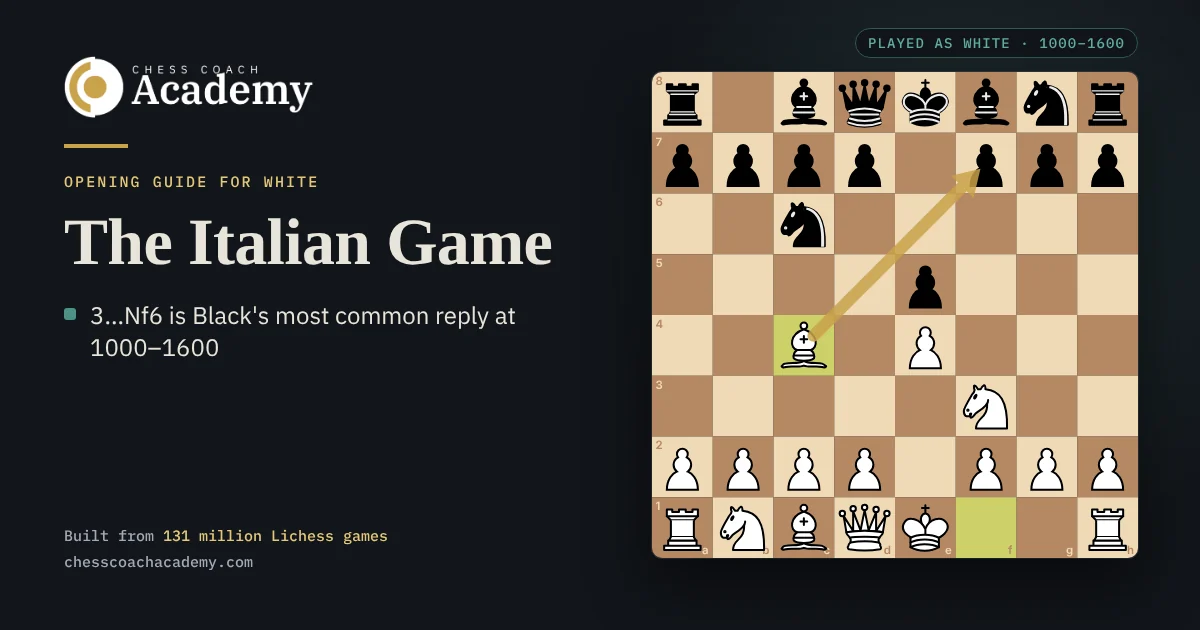
1. e4 e5 2. Nf3 Nc6 3. Bc4
Practice the Italian Game free →Who it's for
Players rated roughly 1000 to 1600 who want an opening that follows the basic rules (develop, castle, fight for the center) and still gives them chances to win quickly when the opponent slips.
It suits you if you like open positions where pieces come out fast. If you would rather play the same setup against everything, a system like the London is less work, but you'll get fewer early wins.
Why it works at 1000 to 1600
- Your moves are natural. Knight to f3, bishop to c4, castle, then c3 and d4. You can find most of them over the board even if you forget the line.
- The data is on your side. Several of the most common replies at this level are small mistakes, and each line shows you the punishment.
- It comes with real traps. Against the Petrov, 4.Qe2! scores 68% wins for White at this level, and you'll learn to sidestep the Blackburne Shilling, which catches about a quarter of White players.
- You have to know a few sharp lines. After 3...Bc5 4.c3 Nf6 5.d4 exd4 6.cxd4 Bb4+ the position gets tactical quickly.
- Not every opponent plays 2...Nc6. About a quarter of Black players choose 2...d6 or 2...Nf6 instead, so you need an answer to those too (both are covered below).
- Quiet lines with d3 can turn slow. If your opponent knows the setup, you win in the middlegame, not in the opening.
What 1000 to 1600 players actually play
Here is what Black actually plays once your bishop lands on c4. The Two Knights move 3...Nf6 is the favorite at 32%, the classical 3...Bc5 comes next at 28%, and 3...h6 shows up in 18% of games. That last one is a beginner habit: it stops Ng5, but it doesn't develop anything, and the lines below show you how to take advantage.
Three numbers from the data are worth remembering:
- At 1000-1600 on Lichess, Black's most common answer to 3.Bc4 is 3...Nf6 (31.7%), ahead of 3...Bc5 (27.8%) and 3...h6 (18.1%).
- About 26% of 1000-1600 rated players fall for the Blackburne Shilling trap (3...Nd4 4.Nxe5??), and they lose 75% of those games.
- After 2...Nf6 3.Nxe5 Nxe4, White's trap 4.Qe2! scores 68% wins for White at this level.
How to play the Italian Game: move by move
Every position below comes straight from the practice lines. The arrows on each board show Black's most common replies at 1000 to 1600, labeled with how often each one is played in that exact position. Under each board you'll find the reply, why players choose it, and the move you answer with.
After 1. e4 e5 2. Nf3
This is the first fork in the road. Most players defend e5 with the knight, but you also need an answer to the Philidor (2...d6) and the Petrov (2...Nf6).
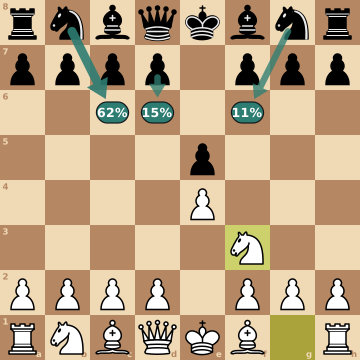
- 2...Nc6 (62%). Nc6 develops and protects e5 at the same time.
Your answer: 3. Bc4. The Italian bishop, aimed straight at f7. - 2...d6 (15%). d6 protects e5 with a pawn instead of a knight.
Your answer: 3. d4. Challenge Black's center right away. - 2...Nf6 (11%). Nf6 ignores the threat to e5 and attacks your e4 pawn instead.
Your answer: 3. Nxe5. Take the pawn.
After 1. e4 e5 2. Nf3 Nc6 3. Bc4
The key position of the whole opening. Five different replies each show up in at least 5% of games, so it pays to know all of them.
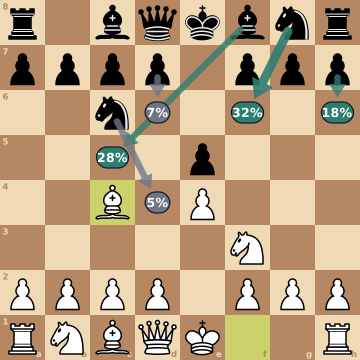
- 3...Nf6 (32%). Bc5. Instead of mirroring you, Black attacks e4.
Your answer: 4. d3. Calmly protects e4 and opens a path for your dark-squared bishop. - 3...Bc5 (28%). Bc5 is the classical reply, and Black's bishop now eyes your f2 pawn.
Your answer: 4. c3. Get ready to build a big pawn center with d4. - 3...h6 (18%). h6 stops Ng5, but it doesn't develop anything.
Your answer: 4. d4. Black wasted a move, so open the center now. - 3...d6 (7%). Be7 before castling.
Your answer: 4. d4. Take the center while Black is passive. - 3...Nd4 (5%). This is the Blackburne Shilling Gambit. It looks like Black just left e5 hanging, and that's the bait.Nxe5??Qg5!Nxf7??Be2 Nf3 is checkmate.
Your answer: 4. Nxd4. Trade off the trap knight instead.
After 1. e4 e5 2. Nf3 Nc6 3. Bc4 Nf6 4. d3
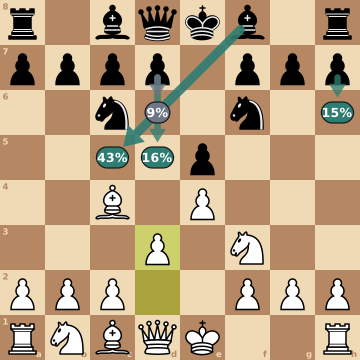
- 4...Bc5 (43%). Bc5 is Black's most natural move here. Both sides now have a bishop aimed at the other's weak f-pawn.
Your answer: 5. O-O. King to safety before anything else. - 4...d5 (16%). d5 is an active idea: Black opens the center while your pieces are still at home.d3.
Your answer: 5. exd5. Take the pawn. - 4...h6 (15%). h6 stops your knight or bishop from ever landing on g5. It's safe, but it spends a whole move on a pawn instead of developing.
Your answer: 5. O-O. Castle while Black spends time on pawn moves. - 4...d6 (9%). d6 looks solid, but it takes away the f8 bishop's best diagonal.O-O) to castle, and until then f7 is defended only by the king.
Your answer: 5. Ng5. Now f7 is attacked twice, by your knight and your bishop.
After 1. e4 e5 2. Nf3 Nc6 3. Bc4 Nf6 4. d3 Bc5 5. O-O
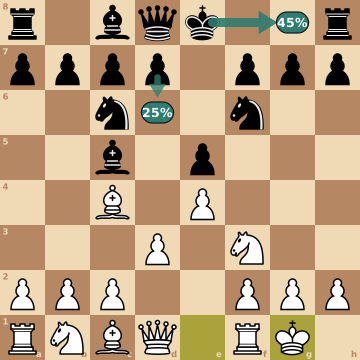
- 5...O-O (45%). O-O is Black's most common choice. Both kings are safe, so now it's a quiet battle for good squares.
Your answer: 6. c3. Prepares d4 and gives your bishop a future retreat to c2. - 5...d6 (25%). d6 supports e5 and opens the c8 bishop. It's a solid move, but it keeps Black's king in the center one move longer.
Your answer: 6. h3. Bg4 before it happens.
After 1. e4 e5 2. Nf3 Nc6 3. Bc4 Bc5 4. c3
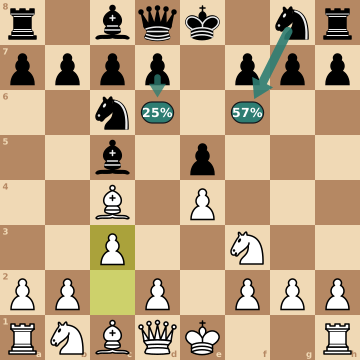
- 4...Nf6 (57%). It develops and pressures e4, so you need to act in the center now.
Your answer: 5. d4. Strike the center now, hitting e5 and the bishop behind it. - 4...d6 (25%). d6 makes sure e5 won't fall when you play d4. It's solid but a bit passive.
Your answer: 5. d4. Strike the center anyway.
After 1. e4 e5 2. Nf3 Nc6 3. Bc4 Bc5 4. c3 Nf6 5. d4 exd4 6. cxd4
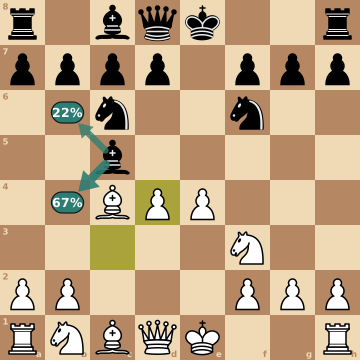
- 6...Bb4+ (67%). Bb4+ gets the bishop out of danger with tempo. It's the correct move, played in about two thirds of games.
Your answer: 7. Nc3. Block the check with a developing move, and offer your e4 pawn. - 6...Bb6 (22%). Bb6? looks safe, but it gives you a free move. With no check to worry about, your pawns can roll forward and kick Black's knights.
Your answer: 7. e5. Kick the f6 knight, and d5 is coming for the other one.
After 1. e4 e5 2. Nf3 Nc6 3. Bc4 Bc5 4. c3 d6 5. d4 exd4 6. cxd4
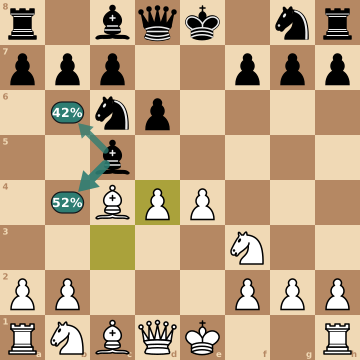
- 6...Bb4+ (52%). d6 already played, Black has no knight on f6 to hit e4, so the check achieves nothing. The bishop on b4 is protected only by the knight on c6. More than half of beginners play it anyway.
Your answer: 7. Nc3. Block the check with a developing move. - 6...Bb6 (42%). Bb6 keeps the bishop safe and aimed at your d4 pawn.d6 played, this is Black's best.
Your answer: 7. O-O. Castle and enjoy your big center.
After 1. e4 e5 2. Nf3 Nc6 3. Bc4 h6 4. d4
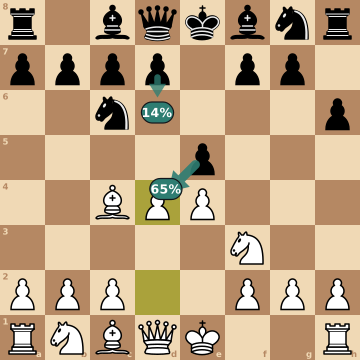
- 4...exd4 (65%). Black takes on d4.
Your answer: 5. Nxd4. Recapture with the knight, centralized and active. - 4...d6 (14%). d6 keeps a pawn in the center, but it's another non-developing move.
Your answer: 5. dxe5. Take, and open the d-file toward Black's king.
After 1. e4 e5 2. Nf3 d6 3. d4
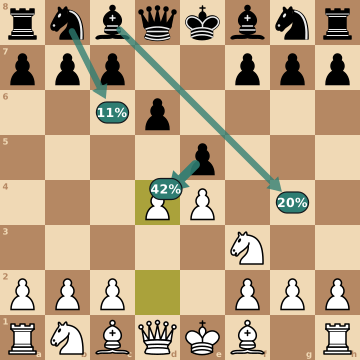
- 3...exd4 (42%). exd4 gives up the center but opens lines for Black's pieces.
Your answer: 4. Nxd4. Recapture with the knight, strong in the center. - 3...Bg4 (20%). Bg4 pins the knight to your queen, but it ignores the center.
Your answer: 4. dxe5. Take the pawn. Black can't simply recapture. - 3...Nc6 (11%). Nc6 develops and adds pressure to d4, but it lets you gain space with tempo.
Your answer: 4. d5. Push with tempo and chase the knight away.
After 1. e4 e5 2. Nf3 Nf6 3. Nxe5
You've taken the pawn on e5. Black's most common reply here is the Stafford Gambit, and the second most common walks into a trap.
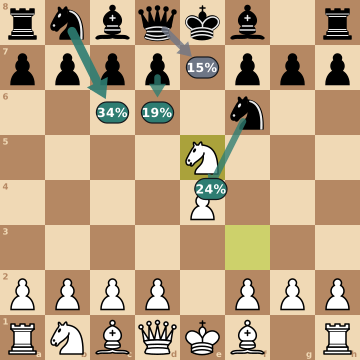
- 3...Nc6 (34%). It's full of tricks, but it just gives away a pawn if you stay calm.
Your answer: 4. Nxc6. Trade and keep your extra pawn. - 3...Nxe4 (24%). Nxe4 looks natural, but copying your opponent can be dangerous. Watch the e-file.
Your answer: 4. Qe2. Attack the knight on e4, and set a trap. - 3...d6 (19%). d6 is the proper Petrov move: chase the knight, then win back e4 afterwards.
Your answer: 4. Nf3. Retreat safely. - 3...Qe7 (15%). Qe7 hits the knight on e5 along the e-file. It's creative, but the queen blocks Black's own bishop.
Your answer: 4. d4. Defend the knight with a pawn.
Your plan after the opening
Against 3...Nf6: slow down with 4.d3
Protect e4 with d3, castle, then play c3 and h3. The pawn on c3 prepares d4 later and gives your bishop a retreat square on c2, while h3 stops ...Bg4 from pinning your knight. You're not trying to win right away here. You're building a position where your pieces are better placed.
1. e4 e5 2. Nf3 Nc6 3. Bc4 Nf6 4. d3 Bc5 5. O-O O-O 6. c3 d6 7. h3
Against 3...Bc5: go straight for the center
Here you play c3 and d4 right away. Black's bishop on c5 is a target for your pawns, and if Black gets the timing wrong you win space and time. After 4...Nf6 5.d4 exd4 6.cxd4, two thirds of players give the check with 6...Bb4+, and you block with 7.Nc3, a developing move.
1. e4 e5 2. Nf3 Nc6 3. Bc4 Bc5 4. c3 Nf6 5. d4 exd4 6. cxd4 Bb4+ 7. Nc3
Against 3...h6: punish the lost move
Black has spent a move on a pawn instead of a piece, so open the center at once with 4.d4. After 4...exd4 5.Nxd4 your knight sits in the middle of the board and you're ahead in development.
Traps and common mistakes
The Blackburne Shilling trap (3...Nd4)
1. e4 e5 2. Nf3 Nc6 3. Bc4 Nd4 4. Nxe5?? Qg5 5. Nxf7?? Qxg2 6. Rf1 Qxe4+ 7. Be2 Nf3#
After 3...Nd4 the pawn on e5 looks free, and that's the point. About 26% of players at this level take it with 4.Nxe5, and they lose 75% of those games. Black's queen jumps to g5, attacking your knight and the g2 pawn at the same time, and greedy play ends in checkmate.
The fix is simple: trade knights with 4.Nxd4 and you're comfortably better.
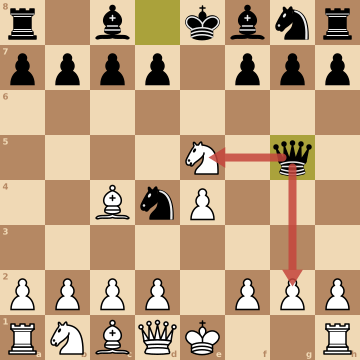
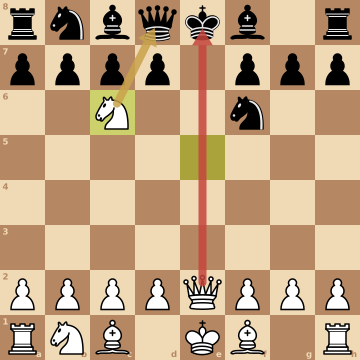
The 4.Qe2 trap against the Petrov
1. e4 e5 2. Nf3 Nf6 3. Nxe5 Nxe4 4. Qe2 Nf6?? 5. Nc6+
When Black copies you with 3...Nxe4, play 4.Qe2. Your queen attacks the knight and lines up with Black's king on the e-file. If the knight retreats with 4...Nf6??, then 5.Nc6+ is a discovered check that wins Black's queen. At this level, 4.Qe2 scores 68% wins for White.
Black's only good answer is 4...Qe7. After 5.Qxe4 d6 6.d4 you're a little better anyway.
Getting tricked by the Stafford Gambit
1. e4 e5 2. Nf3 Nf6 3. Nxe5 Nc6 4. Nxc6 dxc6 5. d3
3...Nc6 is the most common reply once you've taken on e5 (34% of games). It's full of cheap tricks, but it simply gives you a pawn if you stay calm. Take the knight, then play 5.d3 to protect e4 and free your bishop.
Watch for ...Bc5 and ...Ng4 ganging up on f2. Answer with Be2 to take g4 away, then castle. Stockfish rates you about two pawns ahead.
Going for f7 at the wrong moment
Ng5 is tempting in every line, but it only works when Black can't castle quickly. After 3...Nf6 4.d3 d6, Black's bishop is stuck behind the pawn on d6, so 5.Ng5 hits f7 twice and Black is under real pressure. Against a normal setup where Black can castle, the same move just loses time.
Letting a check go unpunished
After 3...Bc5 4.c3 d6 5.d4 exd4 6.cxd4, more than half of players give the check 6...Bb4+ anyway. Block with 7.Nc3. The bishop on b4 is now protected only by the knight on c6, so d5 (kicking the knight) and Qa4 (attacking the bishop) are coming. Stockfish rates you about a pawn ahead.
Frequently asked questions
Is the Italian Game good for beginners?
Yes. Every move follows a basic principle, so even when you forget the line you can usually find a good move. It also gives you real winning chances at 1000 to 1600, because several of the most common replies at that level are small mistakes you can punish.
What is the most common reply to the Italian Game at club level?
At 1000 to 1600 on Lichess it's 3...Nf6, the Two Knights Defense, in 32% of games. The classical 3...Bc5 is second at 28%, and 3...h6 is third at 18%.
What's the difference between the Italian Game, the Giuoco Piano and the Two Knights?
The Italian Game is any game that starts 1.e4 e5 2.Nf3 Nc6 3.Bc4. If Black answers 3...Bc5, that's the Giuoco Piano. If Black answers 3...Nf6, that's the Two Knights Defense. This guide covers both, plus 3...h6, 3...d6 and the 3...Nd4 trap.
Should I play d3 or d4 in the Italian?
In this repertoire it depends on Black's third move. Against 3...Nf6 you play the calm 4.d3 and castle first. Against 3...Bc5 and 3...h6 you strike right away with c3 and d4 (or just 4.d4), because Black isn't ready for it.
Can Black avoid the Italian Game?
Yes, on move two. At 1000 to 1600, 15% of Black players answer 2.Nf3 with 2...d6 (the Philidor) and 11% with 2...Nf6 (the Petrov). Both are covered in this guide and in the practice lines: 3.d4 against the Philidor, and 3.Nxe5 against the Petrov.
Keep learning
- All 36 opening guides: every opening on the site, grouped by what you play as White and Black.
- Italian Game vs Ruy Lopez: Which of the two to learn first, and when to add the other.
- The Italian Game's loud moments: The tactical shots hiding inside the quiet d3 lines.
The Coach plays the Italian Game against you with the moves 1000 to 1600 players actually choose, and explains every move in plain English. Progress tracking is free during the open beta.
Practice the Italian Game free →