The Nimzo-Indian Defense: A Data-Driven Guide for 1400 to 2200 Players
TL;DR: the data
Built from 11 million Lichess games played by 1400 to 2200 rated players You play Black, 20 practice lines, every move of yours checked by Stockfish Most common line 1. d4 Nf6 2. c4 e6 3. Nc3 Bb4 4. Qc2 O-O 5. Nf3 c5 6. e3 d5 Replies to 3...Bb4 4. Qc2 18% · 4. Nf3 17% · 4. Bd2 16% Worth knowing In the 4.Bd2 O-O 5.a3 Bxc3 6.Bxc3 line, only 24% of players find 6...Ne4, but Black wins 55% of those games.
The Nimzo-Indian starts with a simple idea. White's knight on c3 wants to support e4, so you pin it to the king with 3...Bb4. Now the knight can't do its job properly, and at any moment you can take it and leave White with doubled c-pawns.
Most guides teach this opening from games between masters. This one is built from 11 million Lichess games played by 1400 to 2200 rated players, so every line starts from the moves White really plays against you. The first thing the data shows is that there is no single main line at this level. White's fourth move is split almost evenly between 4.Qc2, 4.Nf3, 4.Bd2 and 4.Bg5, with 4.e3 and 4.a3 not far behind. The good news is that one plan handles nearly all of them.
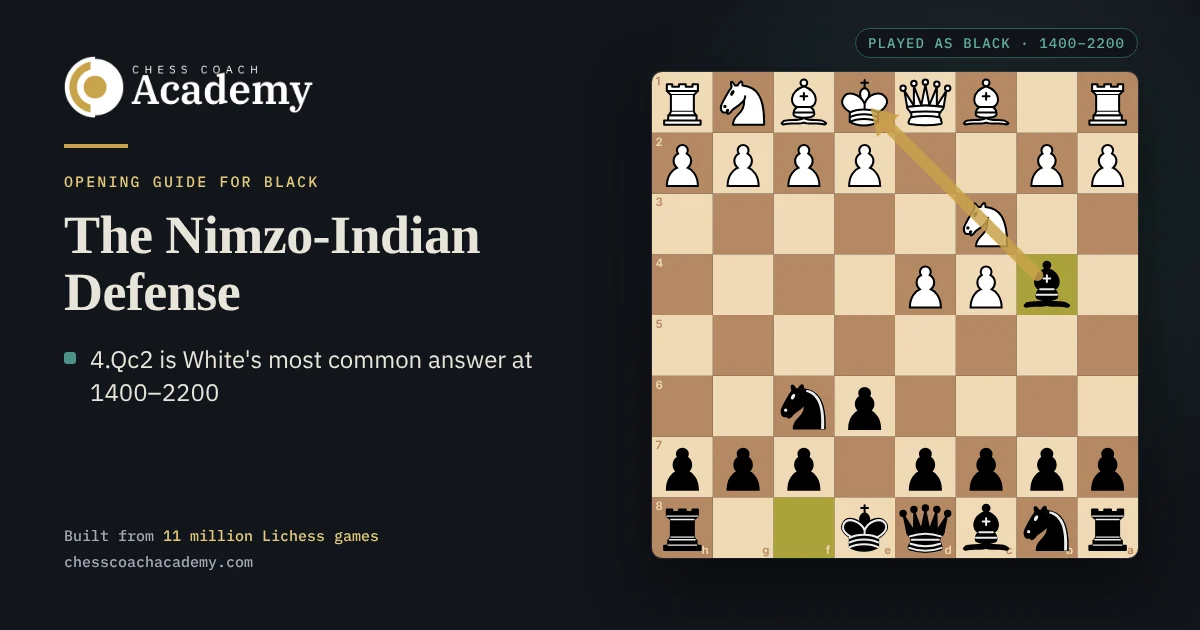
1. d4 Nf6 2. c4 e6 3. Nc3 Bb4
Practice the Nimzo-Indian Defense free →Who it's for
Players rated roughly 1400 to 2200 who want a sound, respected answer to 1.d4 and 2.c4 without memorizing a new plan for every White setup. In almost every line you castle, then hit the center with ...c5 and ...d5, and you take on c3 when it costs White something.
It suits you if you like positional chess: pawn structures, good and bad pieces, and slow pressure on a weak pawn. If you want a sharp fight from move three, the Benko Gambit or the Grünfeld will feel more natural.
Why it works at 1400 to 2200
- One plan covers almost everything. Castle, then ...c5 and ...d5. Many different move orders lead back to the same few positions, so your practice time adds up quickly.
- You decide the pawn structure. Taking on c3 when White can only recapture with the b-pawn leaves doubled c-pawns, and the front one on c4 becomes a target for the rest of the game.
- White's natural moves hide traps. Pushing e4 while the c3 knight is pinned is a common habit at this level, and the lines below show you how to punish it without taking the bait yourself.
- It only starts after 3.Nc3. If White plays 3.Nf3 instead, you need a partner opening such as the Queen's Indian or the Bogo-Indian.
- You often give up the bishop pair. Against 4.Qc2 or 4.Bd2 followed by a3, White keeps two bishops without doubled pawns, so you have to play actively to prove your development lead matters.
- Some lines leave you with an isolated pawn on d5 or give White one on d4. Both are fine for you, but you need to know how to play around them.
What 1400 to 2200 players actually play
Here is what White plays once your bishop lands on b4. 4.Qc2 is the most common move at 18%, but 4.Nf3 (17%), 4.Bd2 (16%) and 4.Bg5 (16%) are close behind, and 4.e3 (12%) and 4.a3 (10%) are both common enough to prepare for. That spread is typical of club play: White players at this level have their own favorite system rather than one shared main line. Your first move is the same against five of the six: castle.
Three numbers from the data are worth remembering:
- At this rating range, 50% of players answer 3.Nc3 with 3...Bb4, far more than 3...d5 (32%).
- White's replies to 3...Bb4 are spread out: 4.Qc2 (18%), 4.Nf3 (17%), 4.Bd2 (16%), 4.Bg5 (16%) and 4.e3 (12%) are all common.
- In the 4.Bd2 O-O 5.a3 Bxc3 6.Bxc3 line, only 24% of players find 6...Ne4, but Black wins 55% of those games.
How to play the Nimzo-Indian Defense: move by move
Every position below comes straight from the practice lines. The boards are shown from your side, and the arrows mark White's most common replies at 1400 to 2200, labeled with how often each one is played in that exact position. Under each board you'll find the reply, why White plays it, and the move you answer with.
After 1. d4 Nf6 2. c4 e6 3. Nc3 Bb4
The defining position of the opening. Six different White moves are all common here, and you castle against every one of them except 4.a3, where you take on c3 at once.
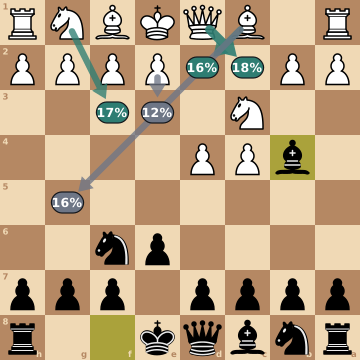
- 4. Qc2 (18%). Qc2 guards e4 and means White can take back on c3 with the queen, so there are no doubled pawns.
Your answer: 4...O-O. Castle first and see what White does. - 4. Nf3 (17%). White doesn't prevent doubled pawns on c3, but gets ready to castle quickly.
Your answer: 4...O-O. Castle and keep your options open. - 4. Bd2 (16%). If you take on c3, White takes back with the bishop and avoids doubled pawns.
Your answer: 4...O-O. Castle and keep developing. - 4. Bg5 (16%). Now both sides have a pinned knight.
Your answer: 4...O-O. Get your king safe first. - 4. e3 (12%). White supports d4 and gets ready to develop the f1 bishop.
Your answer: 4...O-O. Castle first. - 4. a3 (10%). White accepts doubled pawns to get the bishop pair.
Your answer: 4...Bxc3+. Take, and give White doubled c-pawns.
After 1. d4 Nf6 2. c4 e6 3. Nc3 Bb4 4. Qc2 O-O
White's queen now covers c3, so taking there no longer doubles White's pawns. Watch the 5.e4 push: the pinned knight doesn't really defend e4, but grabbing the pawn with your knight is still a mistake.
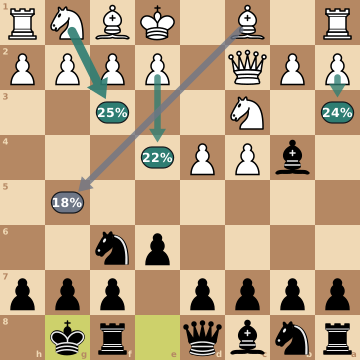
- 5. Nf3 (25%). It's calm, and it defends d4, which lost the queen's protection after Qc2.
Your answer: 5...c5. Hit d4 from the side. - 5. a3 (24%). White is happy to take back on c3 with the queen and get the bishop pair (two bishops against bishop and knight).
Your answer: 5...Bxc3+. Trade the bishop for the knight. - 5. e4 (22%). But the c3 knight is pinned, so only the queen really guards e4.Nxe4??Qxe4 loses your knight.
Your answer: 5...d5. Now e4 is attacked by your pawn and your knight. - 5. Bg5 (18%). White pins your f6 knight with Bg5.
Your answer: 5...c5. Hit d4 while White's kingside is still at home.
After 1. d4 Nf6 2. c4 e6 3. Nc3 Bb4 4. Nf3 O-O
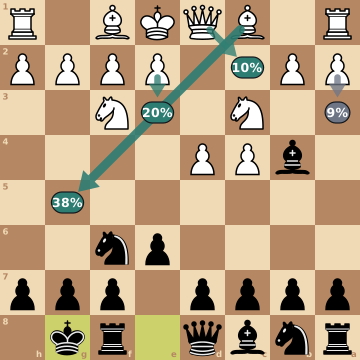
- 5. Bg5 (38%). The f6 knight is pinned to your queen.
Your answer: 5...c5. Attack d4 straight away. - 5. e3 (20%). White wants Bd3 and castling next.
Your answer: 5...c5. Pressure d4 from the side. - 5. Qc2 (10%). Qc2 line: if you take on c3, the queen takes back.
Your answer: 5...c5. Hit the center before White castles. - 5. a3 (9%). White attacks your bishop with a3.
Your answer: 5...Bxc3+. Take, and give White doubled pawns.
After 1. d4 Nf6 2. c4 e6 3. Nc3 Bb4 4. Bd2 O-O
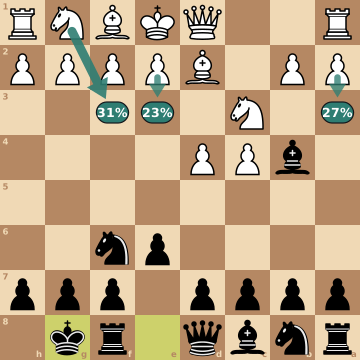
- 5. Nf3 (31%). White develops the knight to f3.
Your answer: 5...c5. Attack d4. - 5. a3 (27%). White attacks your bishop with a3.
Your answer: 5...Bxc3. Take the knight. - 5. e3 (23%). White wants Bd3 or Nf3 next.
Your answer: 5...c5. Pressure d4.
After 1. d4 Nf6 2. c4 e6 3. Nc3 Bb4 4. Bg5 O-O
Now both sides have a pinned knight. Your answer depends on what White does next: ...h6 against the quiet 5.e3, and ...c5 against 5.Nf3 and 5.e4.
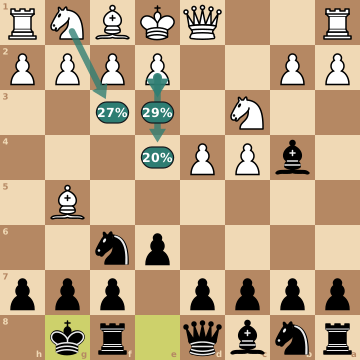
- 5. e3 (29%). White will develop the f1 bishop next.
Your answer: 5...h6. Ask the bishop: take on f6 or retreat. - 5. Nf3 (27%). White develops Nf3.
Your answer: 5...c5. Hit d4. - 5. e4 (20%). Nxe4??Bxd8 wins your queen, because your knight is pinned to it.
Your answer: 5...c5. Counterattack d4 while White's king is still in the center.
After 1. d4 Nf6 2. c4 e6 3. Nc3 Bb4 4. e3 O-O
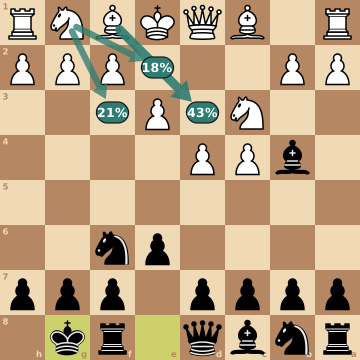
- 5. Bd3 (43%). White develops the bishop to d3.
Your answer: 5...c5. Pressure d4. - 5. Nf3 (21%). Bd3 usually comes next.
Your answer: 5...c5. Same idea: hit d4. - 5. Ne2 (18%). White often follows up with a3.
Your answer: 5...d5. Take space in the center.
After 1. d4 Nf6 2. c4 e6 3. Nc3 Bb4 4. e3 O-O 5. Bd3 c5
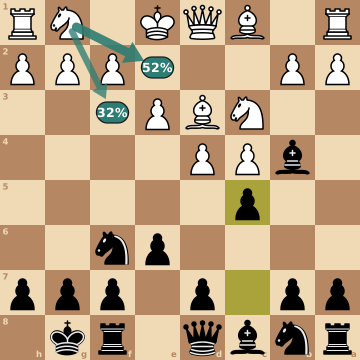
- 6. Ne2 (52%). White develops the knight to e2.
Your answer: 6...d5. Hit c4 and take your share of the center. - 6. Nf3 (32%). White develops Nf3.
Your answer: 6...d5. Complete your center.
After 1. d4 Nf6 2. c4 e6 3. Nc3 Bb4 4. a3 Bxc3+ 5. bxc3 O-O
White has the two bishops and doubled c-pawns. Against both common moves the answer is ...c5, which keeps the c-pawns stuck and starts the pressure on c4.
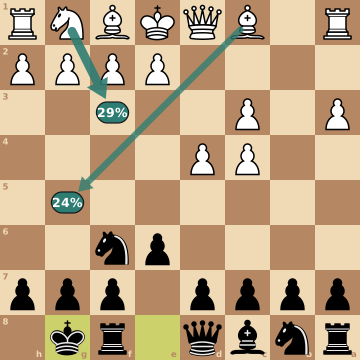
- 6. Nf3 (29%). White develops Nf3.
Your answer: 6...c5. Fix the doubled pawns and pressure d4. - 6. Bg5 (24%). White pins your knight with Bg5.
Your answer: 6...c5. Hit d4 and ignore the pin for now.
Your plan after the opening
Against 4.e3, 4.Nf3 and 4.Bd2: castle, then ...c5 and ...d5
This is the heart of the opening. Your c5 pawn hits d4 from the side, your d5 pawn challenges c4, and your bishop on b4 keeps White's knight tied down. Very often White takes on d5 and c5, and you end up with an isolated pawn on d5 or White ends up with one on d4.
If your d5 pawn is isolated, keep your pieces active: ...Bg4 to pin the f3 knight, ...Nbd7 or ...Bxc5 to win back the c5 pawn, and a rook on the open file. If White's d4 pawn is isolated, put a knight on d5 in front of it and aim everything else at it.
1. d4 Nf6 2. c4 e6 3. Nc3 Bb4 4. e3 O-O 5. Bd3 c5 6. Nf3 d5 7. cxd5 exd5 8. dxc5 Bg4
Against 4.Qc2: use your lead in development
After 5.a3 Bxc3+ 6.Qxc3, White has the two bishops but has spent three moves with the queen and a pawn. Take your share of the center with ...d5, then play ...b6 and ...Bb7, and open the position with ...c5 before White finishes developing. Against the calm 5.Nf3, the usual ...c5 and ...d5 plan works.
1. d4 Nf6 2. c4 e6 3. Nc3 Bb4 4. Qc2 O-O 5. a3 Bxc3+ 6. Qxc3 d5 7. Nf3 dxc4 8. Qxc4 b6
Against 4.a3: fix the doubled pawns and attack c4
Once White has recaptured with the b-pawn, ...c5 stops White from ever playing c4-c5 to untangle the pawns. From there the plan is simple: ...Nc6, ...b6 and ...Ba6 all point at c4. White's two bishops want open lines, so keep the center fairly closed and let the weak pawn be the story of the game.
1. d4 Nf6 2. c4 e6 3. Nc3 Bb4 4. a3 Bxc3+ 5. bxc3 O-O 6. Nf3 c5
Against 4.Bg5: ask the bishop with ...h6
After 5.e3 h6, if White takes 6.Bxf6, don't recapture straight away. Play 6...Bxc3+ first, so White has to take back with the b-pawn, and only then 7...Qxf6. Each side has traded a bishop for a knight, and White is left with doubled c-pawns. If White retreats 6.Bh4 instead, carry on with ...c5 and ...d5.
1. d4 Nf6 2. c4 e6 3. Nc3 Bb4 4. Bg5 O-O 5. e3 h6 6. Bxf6 Bxc3+ 7. bxc3 Qxf6
Traps and common mistakes
Grabbing e4 while your own knight is pinned
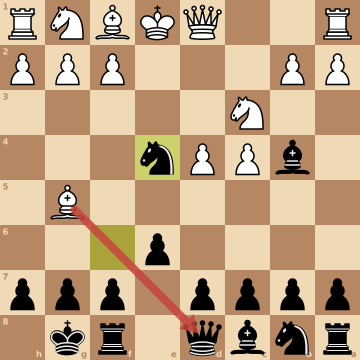
1. d4 Nf6 2. c4 e6 3. Nc3 Bb4 4. Bg5 O-O 5. e4 Nxe4?? 6. Bxd8
When White pushes e4 early, the pawn looks loose because the c3 knight is pinned. But your own knight can be pinned too. After 4.Bg5 O-O 5.e4, the f6 knight shields your queen, so 5...Nxe4?? simply drops the queen to 6.Bxd8.
The same idea costs a piece in the 4.Qc2 line: after 5.e4, 5...Nxe4?? 6.Qxe4 wins your knight. In both cases the right reply is to hit the center instead, with 5...c5 against Bg5 and 5...d5 against Qc2.
Saving the knight when you should counterattack
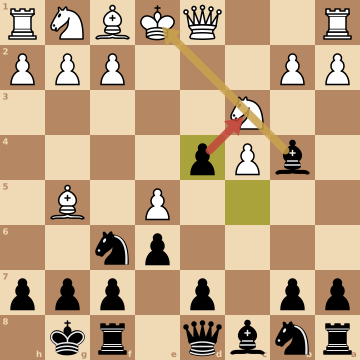
1. d4 Nf6 2. c4 e6 3. Nc3 Bb4 4. Bg5 O-O 5. e4 c5 6. e5 cxd4
After 5...c5 6.e5, White pushes in 70% of games, and it looks crushing: your f6 knight is pinned and attacked. Don't move it. 6...cxd4 attacks White's c3 knight, which is pinned too.
If 7.exf6??, then 7...dxc3 wins a piece. If 7.Qxd4?, then 7...Nc6 hits the queen and Stockfish rates you more than a pawn better. White's best is 7.a3, and even then the tree rates you slightly better.
Trading off your best knight in the 4.Qc2 e4 line
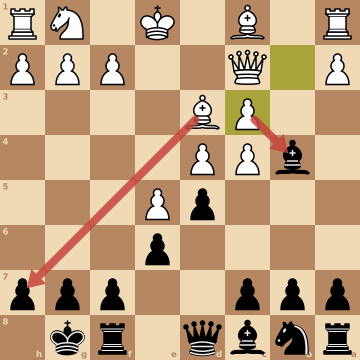
1. d4 Nf6 2. c4 e6 3. Nc3 Bb4 4. Qc2 O-O 5. e4 d5 6. e5 Ne4 7. Bd3 Nxc3? 8. bxc3
After 6.e5 Ne4 7.Bd3, your knight is attacked twice, and trading it looks like the obvious fix. It isn't. After 8.bxc3 your bishop on b4 is attacked, and the queen and bishop battery points straight at h7 with Bxh7+ coming. Stockfish rates White more than three pawns better.
Instead, leave the knight where it is and play 7...c5. It hits d4 and opens the c-file toward White's queen. If White takes 8.Bxe4 dxe4 9.Qxe4?, then 9...Qxd4 wins material.
Missing 6...Ne4 after 4.Bd2 and 5.a3
1. d4 Nf6 2. c4 e6 3. Nc3 Bb4 4. Bd2 O-O 5. a3 Bxc3 6. Bxc3 Ne4
When White recaptures on c3 with the bishop, the natural moves are ...d5 or ...b6. The data points to something better. Only 24% of players at this level find 6...Ne4, but Black wins 55% of those games.
The knight attacks the bishop on c3 and offers to trade itself for it, which takes away White's bishop pair. After 7.Qc2 Nxc3 8.Qxc3 b6 you follow with ...Bb7 and later ...f5 or ...e5.
Retreating the bishop to a5
1. d4 Nf6 2. c4 e6 3. Nc3 Bb4 4. e3 O-O 5. Ne2 d5 6. a3 Ba5? 7. b4 Bb6 8. c5
After 4.e3 O-O 5.Ne2 d5 6.a3, taking on c3 gains nothing because the e2 knight recaptures without doubled pawns. The bishop has to retreat, and a5 is the wrong square. White kicks it with b4 and then traps it with c5.
Drop back to 6...Be7 instead. It's safe there, and you continue with ...c6, ...b6 and ...Nbd7.
Frequently asked questions
Is the Nimzo-Indian good for club players?
Yes. It gives you one plan (castle, ...c5, ...d5, take on c3 when it doubles White's pawns) that works against almost every White setup. At 1400 to 2200 on Lichess, White's fourth move is spread over six common choices, and the same few ideas cover all of them.
What is the most common reply to the Nimzo-Indian at club level?
At 1400 to 2200 on Lichess it's 4.Qc2 in 18% of games, but it barely leads. 4.Nf3 (17%), 4.Bd2 (16%) and 4.Bg5 (16%) are almost as popular, so you need to know all four. In this repertoire you castle against each of them.
Should Black always take on c3 in the Nimzo-Indian?
No. Take when it costs White something: after 4.a3 or 5.a3 without a queen or bishop covering c3, White has to recapture with the b-pawn and gets doubled pawns. Against 4.Bd2 and 5.a3 you take and follow up with ...Ne4 to trade off White's bishop. When a knight on e2 can recapture, keep the bishop with ...Be7.
What do I play if White avoids the Nimzo-Indian with 3.Nf3?
You need a partner opening. The two usual choices are the Queen's Indian (3...b6) and the Bogo-Indian (3...Bb4+), and both have their own guide on this site. Both keep your first two moves the same, so the switch is small.
Keep learning
- All 36 opening guides: every opening on the site, grouped by what you play as White and Black.
- Nimzo-Indian vs Queen's Indian vs Bogo-Indian: How the three fit together, and which partner to pick for when White plays 3.Nf3.
- The most reliable 1.d4 defenses for Black: Nine 1.d4 defenses compared with Lichess data at club level.
The Coach plays White against your Nimzo-Indian with the moves 1400 to 2200 players actually choose, from 4.Qc2 to 4.a3, and explains every move in plain English. Progress tracking is free during the open beta.
Practice the Nimzo-Indian Defense free →