The Closed Ruy Lopez at 1600 to 2400: The Plans, the Marshall and the Sidelines You'll Meet
TL;DR: the data
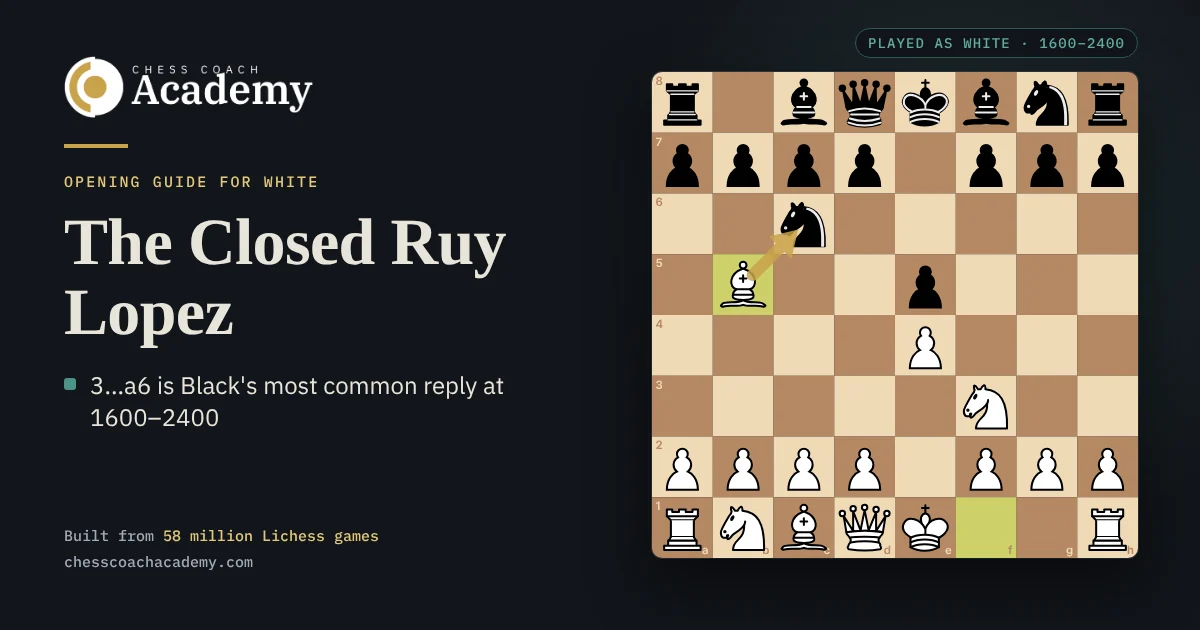
Built from 58 million Lichess games played by 1600 to 2400 rated players You play White, 23 practice lines, every move of yours checked by Stockfish Most common line 1. e4 e5 2. Nf3 Nc6 3. Bb5 a6 4. Ba4 Nf6 5. O-O Be7 6. Re1 b5 7. Bb3 O-O 8. c3 d5 9. exd5 Replies to 5.O-O 5...Be7 40% · 5...b5 36% · 5...Bc5 8% Worth knowing After 3...Bc5 4.c3 d6 5.d4 exd4 6.cxd4 Bb4+, only 12% of White players find 7.Kf1, but they win 69% of games, compared with 55% after 7.Nc3.
The Ruy Lopez starts 1.e4 e5 2.Nf3 Nc6 3.Bb5. Instead of aiming at f7 like the Italian, your bishop puts slow pressure on the c6 knight, the piece that guards e5. The Closed Ruy Lopez is the main line that follows: 3...a6 4.Ba4 Nf6 5.O-O Be7 6.Re1 b5 7.Bb3, then c3, h3 and d4 to build a big center.
Most guides teach it from games between masters and spend most of their time on that main road. This guide is built from 58 million Lichess games played by 1600 to 2400 rated players, and they mix it up a lot more. Only 31% of them answer 3.Bb5 with 3...a6. The rest choose 3...d6, the Berlin 3...Nf6, 3...Bc5 or 3...Nge7, and each of those has its own plan and its own chances for you.
1. e4 e5 2. Nf3 Nc6 3. Bb5 a6 4. Ba4 Nf6 5. O-O Be7 6. Re1 b5 7. Bb3
Practice the Ruy Lopez (Closed) free →Who it's for
Players rated roughly 1600 to 2400 who like building a strong position slowly and want one repertoire against 1...e5 that will last for years. The plan in almost every line is the same: castle, Re1, c3, then d4.
It suits you if you're happy to win in the middlegame rather than the opening. If you want quick attacks and less theory, the Italian or the Scotch will give you simpler positions.
Why it works at 1600 to 2400
- One plan covers most lines: castle, Re1, c3, h3 and d4. Different move orders often lead back to the same position.
- Common sidelines have clear punishments. 3...Bc5 4.c3 d6? runs into the Kf1 trick, and 3...d6 4.d4 a6? loses a pawn after Bxc6+ and dxe5.
- Your pressure lasts. Even in level positions, Black usually has the harder job of finding good squares.
- Black has several sound defenses. Against the main lines, the Berlin and the Marshall you get a small edge at most, not a quick win.
- In several lines Black can take your e4 pawn after you castle, so you need to know how to win it back with d4 and Re1.
- The Marshall Attack (8...d5) gives Black real attacking chances for a pawn, and it comes up often in this data.
What 1600 to 2400 players actually play
Once you've castled, Black decides what kind of Ruy Lopez it will be. 5...Be7 (40%) heads for the Closed main line, and 5...b5 (36%) usually gets there too, or goes for the active ...Bc5 setup. The rest are smaller: 5...Bc5 and the Open Ruy Lopez 5...Nxe4 at 8% each, and the solid 5...d6 at 7%. None of them is a mistake, so this is about knowing your plan, not springing traps.
Three numbers from the data are worth remembering:
- After 3.Bb5, players rated 1600-2400 on Lichess answer 3...a6 in 31% of games, 3...d6 in 22%, 3...Nf6 (the Berlin) in 16% and 3...Bc5 in 13%.
- After 3...Bc5 4.c3 d6 5.d4 exd4 6.cxd4 Bb4+, only 12% of White players find 7.Kf1, but they win 69% of games, compared with 55% after 7.Nc3.
- In the main line after 7.Bb3, Black castles in 63% of games (keeping the Marshall gambit possible) and plays 7...d6 in 36%.
How to play the Ruy Lopez (Closed): move by move
Each board below is a decision point from the practice lines. The arrows show Black's most common replies at 1600 to 2400, labeled with how often each one is played in that exact position. Under each board you'll find why players choose the move and the answer you play.
After 1. e4 e5 2. Nf3 Nc6 3. Bb5
The big fork in the road. Fewer than a third of players go for the main line with 3...a6, so you need a plan against all five common replies.
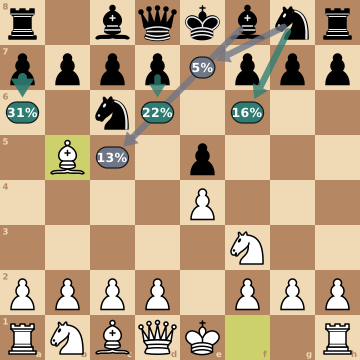
- 3...a6 (31%). b5 is available later.
Your answer: 4. Ba4. Keep the bishop, and keep it aimed at the c6 knight. - 3...d6 (22%). It also opens the line from your b5 bishop through c6 and d7 to Black's king, so the c6 knight is now pinned.
Your answer: 4. d4. Challenge e5 straight away. - 3...Nf6 (16%). a6 and attacks your e4 pawn at once.
Your answer: 4. O-O. Castle and let Black take e4 if they want. - 3...Bc5 (13%). Your c3 and d4 will target it.
Your answer: 4. c3. Prepare d4, hitting e5 and the bishop together. - 3...Nge7 (5%). The knight often heads to g6 later.
Your answer: 4. c3. Prepare d4 and a big center.
After 1. e4 e5 2. Nf3 Nc6 3. Bb5 a6 4. Ba4
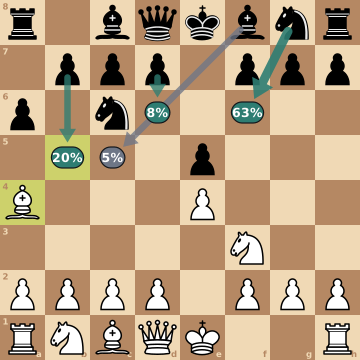
- 4...Nf6 (63%). It develops a piece and puts a question to your e4 pawn.
Your answer: 5. O-O. Castle first. Don't worry about the e4 pawn. - 4...b5 (20%). It gains space but loosens Black's queenside.
Your answer: 5. Bb3. The bishop lands on its best diagonal, aiming at f7. - 4...d6 (8%). Black keeps a strong grip on e5 and delays the knight to f6.
Your answer: 5. c3. Prepare d4, and make sure you can recapture on d4 with a pawn. - 4...Bc5 (5%). But it will be a target for your d4 push.
Your answer: 5. c3. Prepare d4, which will hit e5 and the bishop together.
After 1. e4 e5 2. Nf3 Nc6 3. Bb5 a6 4. Ba4 Nf6 5. O-O
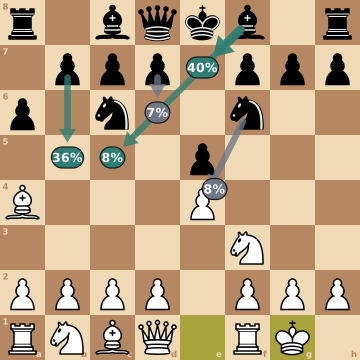
- 5...Be7 (40%). Now Black is ready to take on e4 safely, so you need to deal with it.
Your answer: 6. Re1. Protects e4 and creates a threat. - 5...b5 (36%). It also leaves Black free to put the f8 bishop on c5.
Your answer: 6. Bb3. Back to the diagonal toward f7. - 5...Bc5 (8%). The downside is that your d2-d4 will hit it.
Your answer: 6. c3. Prepare d4 to attack e5 and the bishop at once. - 5...Nxe4 (8%). Black takes the pawn, and you'll win it back by opening the center.
Your answer: 6. d4. Hit e5 and open the center while Black's king is still on e8. - 5...d6 (7%). It makes e5 safe and opens the c8 bishop.
Your answer: 6. c3. Prepare d4 and give the bishop the c2 square.
After 1. e4 e5 2. Nf3 Nc6 3. Bb5 a6 4. Ba4 Nf6 5. O-O Be7 6. Re1
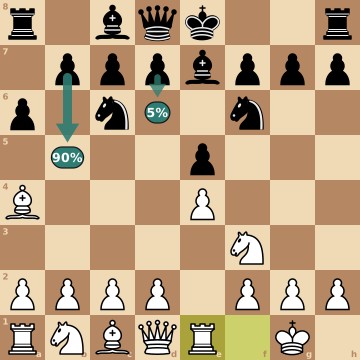
- 6...b5 (90%). Black kicks your bishop with b5 and removes the threat.
Your answer: 7. Bb3. The bishop steps back and now aims at f7. - 6...d6 (5%). Black defends e5 with d6 instead of kicking the bishop.
Your answer: 7. c3. Prepare d4, and give the bishop a way back to c2.
After 1. e4 e5 2. Nf3 Nc6 3. Bb5 a6 4. Ba4 Nf6 5. O-O Be7 6. Re1 b5 7. Bb3
The Closed Ruy Lopez. If Black castles here, the Marshall with ...d5 is still possible after your c3. If Black plays ...d6, it's gone.
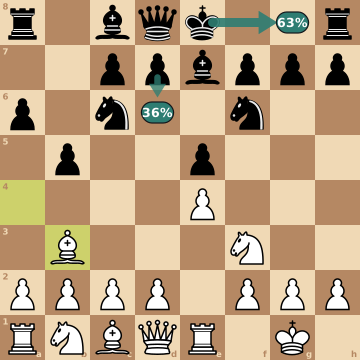
- 7...O-O (63%). d5 gambit.
Your answer: 8. c3. Prepares d4 and gives your bishop a retreat square on c2. - 7...d6 (36%). d5 is no longer coming.
Your answer: 8. c3. The same key move: prepare d4 and make room for the bishop on c2.
After 1. e4 e5 2. Nf3 Nc6 3. Bb5 a6 4. Ba4 Nf6 5. O-O b5 6. Bb3
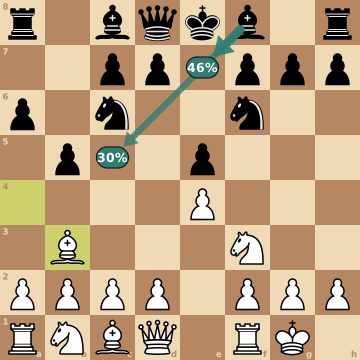
- 6...Be7 (46%). O-O this becomes the same position as the main line.
Your answer: 7. Re1. Protects e4 so you can play your normal setup. - 6...Bc5 (30%). Ng4. It's an active, modern setup.
Your answer: 7. c3. Get ready for d4, which will hit e5 and the bishop together.
After 1. e4 e5 2. Nf3 Nc6 3. Bb5 d6 4. d4
The c6 knight is pinned, so the pressure on e5 is real. Watch for 4...a6, which ignores the pin.
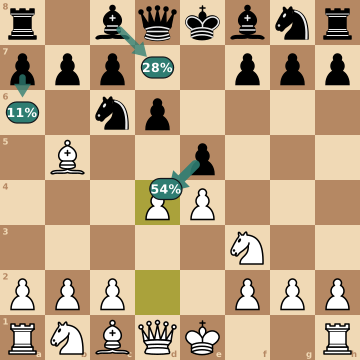
- 4...exd4 (54%). It releases the tension but hands you more central space.
Your answer: 5. Nxd4. Recapture with the knight, strong in the center. - 4...Bd7 (28%). Now the c6 knight is free again, so it defends e5 properly.
Your answer: 5. Nc3. Develop and protect e4. Keep the tension. - 4...a6 (11%). a6? You can take on c6 with check, and then Black's e5 pawn gets into trouble.
Your answer: 5. Bxc6+. Take with check and remove the defender of e5.
After 1. e4 e5 2. Nf3 Nc6 3. Bb5 d6 4. d4 exd4 5. Nxd4 Bd7 6. Nc3
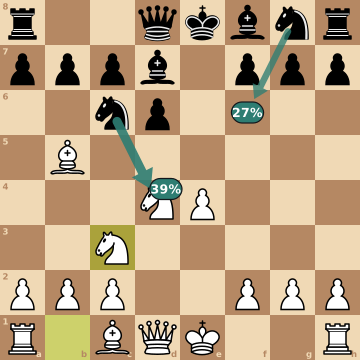
- 6...Nxd4 (39%). Black trades knights on d4. This helps you.
Your answer: 7. Bxd7+. Trade bishops with check first. - 6...Nf6 (27%). Your e4 pawn is safe because the c3 knight protects it.
Your answer: 7. O-O. King to safety first.
After 1. e4 e5 2. Nf3 Nc6 3. Bb5 Nf6 4. O-O
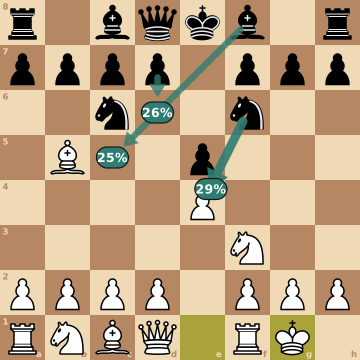
- 4...Nxe4 (29%). You'll win the pawn back.
Your answer: 5. d4. Hit e5 and open the e-file. - 4...d6 (26%). Black supports e5 with d6.
Your answer: 5. c3. Prepare d4. - 4...Bc5 (25%). The bishop eyes f2, but it will be a target for your d4.
Your answer: 5. c3. Prepare d4, which will attack the bishop and gain time.
After 1. e4 e5 2. Nf3 Nc6 3. Bb5 Bc5 4. c3
The Classical. Three of the four common replies are fine, but 4...d6 empties d7 and pins the c6 knight to Black's king.
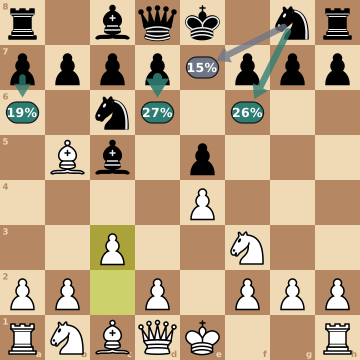
- 4...d6 (27%). d6? looks solid, but it empties d7. Now the c6 knight is pinned to Black's king by your b5 bishop, and d4 is coming.
Your answer: 5. d4. Hit e5 and the c5 bishop at the same time. - 4...Nf6 (26%). Castling now is fine.
Your answer: 5. O-O. Castle, then play d4. - 4...a6 (19%). Qd4.
Your answer: 5. Bxc6. Remove the defender of e5. - 4...Nge7 (15%). Black develops Nge7 to support the c6 knight.
Your answer: 5. d4. Hit e5 and the bishop.
Your plan after the opening
The Closed main line: c3, h3, d4, and the knight tour
After 7...d6 8.c3 O-O, play 9.h3 to take g4 away from Black's bishop before you push d4. Then d4 builds a big center, and the queen's knight travels Nbd2, Nf1 and Ng3 to join the kingside. Your bishop can drop back to c2 whenever it's chased. Stockfish rates it a small edge for you.
1. e4 e5 2. Nf3 Nc6 3. Bb5 a6 4. Ba4 Nf6 5. O-O Be7 6. Re1 b5 7. Bb3 d6 8. c3 O-O 9. h3 Bb7 10. d4 Re8 11. Nbd2
Against the Marshall: take the pawn and defend calmly
After 7...O-O 8.c3, Black can offer a pawn with 8...d5. Take it. After 9.exd5 Nxd5 10.Nxe5 Nxe5 11.Rxe5 you're a clean pawn up. Black will bring pieces toward your king with ideas like ...c6, ...Bd6 and ...Qh4. Finish your development with d4, the rook back to e1, Be3 and Qd3, and only then Nd2. Played too early, Nd2 blocks your bishop and leaves the queen on d1, where ...Bg4 can hit it. Don't go looking for more material. Stockfish rates you slightly better.
1. e4 e5 2. Nf3 Nc6 3. Bb5 a6 4. Ba4 Nf6 5. O-O Be7 6. Re1 b5 7. Bb3 O-O 8. c3 d5 9. exd5 Nxd5 10. Nxe5 Nxe5 11. Rxe5
Against 3...d6: take the center, then castle long
Push 4.d4 at once, because the c6 knight is pinned. After 4...exd4 5.Nxd4 Bd7 6.Nc3 Nxd4, trade bishops with check and take back on d4 with your queen. Black has no knight left to chase it. Then Bg5 and O-O-O, and pile up on the d6 pawn along the open d-file. Stockfish rates you clearly better, well over a pawn.
1. e4 e5 2. Nf3 Nc6 3. Bb5 d6 4. d4 exd4 5. Nxd4 Bd7 6. Nc3 Nxd4 7. Bxd7+ Qxd7 8. Qxd4 Nf6 9. Bg5
Against the Berlin: castle, d4, and the endgame
After 3...Nf6 4.O-O Nxe4 5.d4 Nd6 6.Bxc6 dxc6 7.dxe5 Nf5 8.Qxd8+ Kxd8 you reach the Berlin endgame. It's level, but it's a real game: Black has the two bishops and can't castle, while you have four pawns against three on the kingside. Play Nc3, h3, Rd1 and Bf4 or Bg5, then push your kingside pawns.
Against 4...Bc5, play 5.c3 and then d4, which hits e5 and the bishop together.
1. e4 e5 2. Nf3 Nc6 3. Bb5 Nf6 4. O-O Nxe4 5. d4 Nd6 6. Bxc6 dxc6 7. dxe5 Nf5 8. Qxd8+ Kxd8 9. Nc3
Traps and common mistakes
Missing the Kf1 trick against 3...Bc5 4.c3 d6?
1. e4 e5 2. Nf3 Nc6 3. Bb5 Bc5 4. c3 d6 5. d4 exd4 6. cxd4 Bb4+ 7. Kf1! a6 8. Bxc6+ bxc6 9. Qa4 a5 10. a3
With ...d6 played, the c6 knight is pinned to Black's king by your b5 bishop. So after 6...Bb4+, the bishop on b4 has no real defender. Blocking with Bd2 or Nc3 hands Black a piece to trade it for. 7.Kf1! steps aside and leaves the bishop stranded: Qa4 and d5 are both coming.
Only 12% of White players find 7.Kf1, but they win 69% of games, compared with 55% after 7.Nc3. Losing the right to castle doesn't matter here, because Black has no quick way to attack your king. Stockfish rates you more than three pawns better.
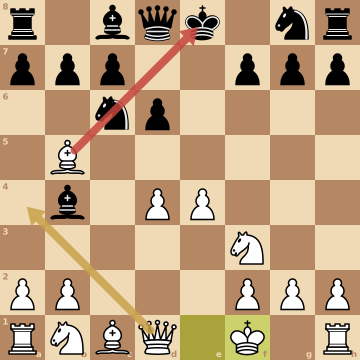
The Noah's Ark trap: never recapture with the queen
1. e4 e5 2. Nf3 Nc6 3. Bb5 a6 4. Ba4 d6 5. d4 b5 6. Bb3 Nxd4 7. Nxd4 exd4 8. Qxd4?? c5
After 4...d6, pushing d4 straight away looks natural. But after 5...b5 6.Bb3 Nxd4 7.Nxd4 exd4, taking back with the queen loses. 8...c5 kicks the queen, and ...c4 follows, trapping your bishop on b3.
That's why this guide plays 5.c3 first. When Black captures on d4, you take back with a pawn.
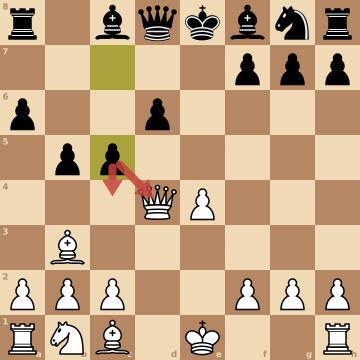
Black ignores the pin: 3...d6 4.d4 a6?
1. e4 e5 2. Nf3 Nc6 3. Bb5 d6 4. d4 a6 5. Bxc6+ bxc6 6. dxe5 dxe5 7. Qxd8+ Kxd8 8. Nxe5
About one player in ten answers 4.d4 with 4...a6, as if the bishop weren't pinning anything. Take with check, 5.Bxc6+, then 6.dxe5. If Black recaptures on e5, the queens come off and 8.Nxe5 wins a pawn, because the c8 bishop stops Black's rook from taking back on d8. Stockfish rates you clearly better, nearly two pawns.
Taking on e5 too early against 4...Bd7
The same trades don't work once Black has unpinned with 3...d6 4.d4 Bd7. After Bxc6 Bxc6 dxe5 dxe5 Qxd8+, Black recaptures with the rook and is already a little better, because your e4 pawn is weak. Develop with 5.Nc3 instead and let Black decide about the center.
Frequently asked questions
Is the Ruy Lopez good for club players?
Yes, especially from about 1600 up. The plan (castle, Re1, c3, d4) is the same in most lines, and several common sidelines have clear punishments. It asks more patience than the Italian, because your edge usually comes in the middlegame.
What is the most common reply to the Ruy Lopez on Lichess?
After 3.Bb5, players rated 1600-2400 on Lichess answer 3...a6 in 31% of games, 3...d6 in 22%, 3...Nf6 (the Berlin) in 16% and 3...Bc5 in 13%. So the main line is the most common single reply, but most players choose something else.
What is the difference between the Closed and the Open Ruy Lopez?
In both, Black plays 3...a6 4.Ba4 Nf6 5.O-O. In the Closed Ruy Lopez Black continues 5...Be7 (40% at this level) and keeps the center closed. In the Open Ruy Lopez Black takes your pawn with 5...Nxe4 (8%), and you win it back with 6.d4 and open lines.
Should I accept the Marshall Attack?
Yes. After 7...O-O 8.c3 d5 9.exd5 Nxd5 10.Nxe5 Nxe5 11.Rxe5 you're a pawn up and Stockfish rates you slightly better. Black gets quick development and chances against your king, so finish your development calmly with d4, the rook back to e1, Be3, Qd3 and then Nd2.
How do you play against the Berlin Defense?
This guide castles with 4.O-O. After 4...Nxe4 5.d4 Nd6 6.Bxc6 dxc6 7.dxe5 Nf5 8.Qxd8+ Kxd8 you reach the Berlin endgame, which is level. Your trumps are the kingside pawn majority and Black's king, which can no longer castle.
Keep learning
- All 36 opening guides: every opening on the site, grouped by what you play as White and Black.
- Italian Game vs Ruy Lopez: How the Ruy compares with the Italian, and which one to learn first.
- Best chess openings by rating: Where the Ruy Lopez fits among openings grouped by the rating range they suit.
The Coach plays the Closed Ruy Lopez against you with the moves 1600 to 2400 players actually choose, from the Marshall to the Berlin and the Kf1 trick, and explains every move in plain English. Progress tracking is free during the open beta.
Practice the Ruy Lopez (Closed) free →