The Dutch Defense for 1200 to 2000 Players: Two Setups, Built From Real Games
TL;DR: the data
Built from 16 million Lichess games played by 1200 to 2000 rated players You play Black, 20 practice lines, every move of yours checked by Stockfish Most common line 1. d4 f5 2. c4 Nf6 3. Nc3 e6 4. Bg5 Bb4 5. e3 Bxc3+ Replies to 3...e6 4. Bg5 32% · 4. Nf3 27% · 4. e3 11% Worth knowing After 2.c4 Nf6 3.Nc3 e6 4.Bg5 Bb4 5.e3 Bxc3+, Black wins 53% of games.
The Dutch Defense starts 1.d4 f5. Instead of meeting White's pawn head on, you grab the e4 square with a pawn and, one move later, a knight on f6. Almost everything you do in this opening is about that square: stop White from pushing e4, then put your own knight there.
This guide is built from 16 million Lichess games between players rated 1200 to 2000. At that level 1...f5 is rare, which is part of its appeal: plenty of your opponents will be playing it for the first time. You'll learn two setups, a ...Bb4 system against 2.c4 and Nc3 and the ...g6 Leningrad against Nf3 lines, plus a ...b6 plan against the London.
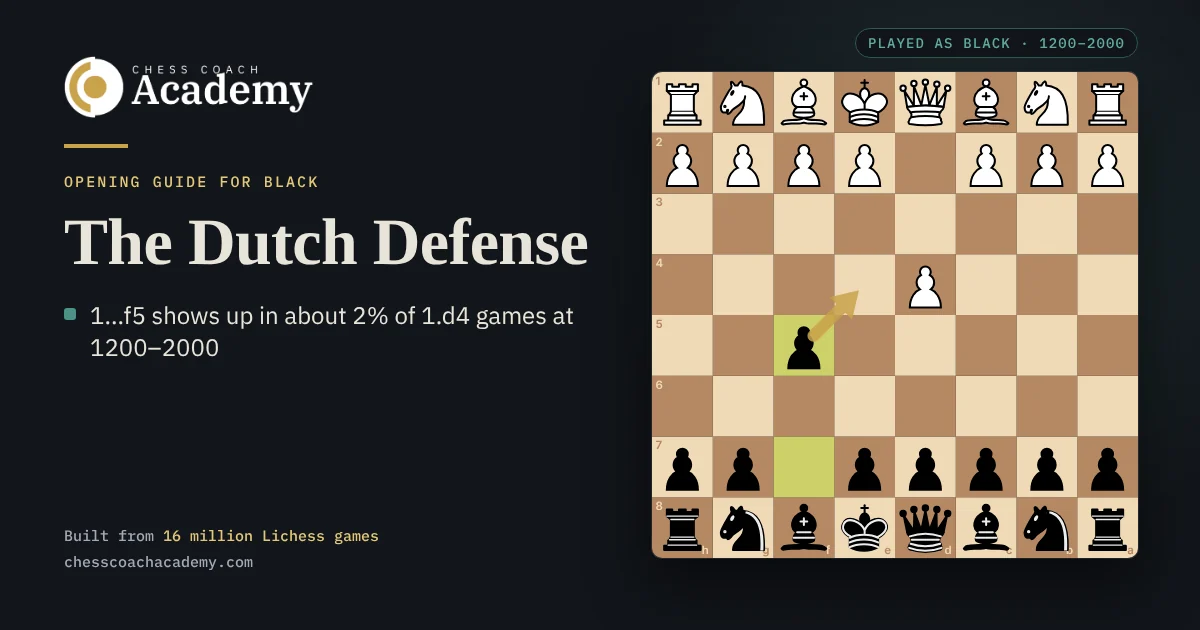
1. d4 f5
Practice the Dutch Defense free →Who it's for
Players rated about 1200 to 2000 who want an unbalanced game against 1.d4 instead of a quiet, symmetrical one. If you enjoy attacking on the kingside and don't mind a slightly loose position, the Dutch gives you exactly that.
It's less suited to players who hate defending. Moving the f-pawn opens the diagonal from h5 to your king, so you'll need to stay alert until you've castled. If you want something calmer, a ...d5 system like the Slav asks much less of you.
Why it works at 1200 to 2000
- It surprises people. At this level 1...f5 appears in about 2% of games after 1.d4, so many opponents won't have a plan ready.
- The plans repeat. Control e4, castle quickly, then push ...e5 or put a knight on e4. Those ideas work in almost every line below.
- The ...Bb4 pin works well. Against Nc3 lines, ...Bb4 pins the knight that wants to support e4, and taking on c3 often leaves White with doubled c-pawns.
- Your king is a little exposed. Until you've castled, watch for Qh5+ tricks, especially once your f6 knight has moved.
- White keeps a small edge in many lines. Stockfish often gives White about half a pawn, which is normal for a Black opening but means you have to earn your wins.
- You need two setups, not one. The ...e6 and ...Bb4 system and the ...g6 Leningrad are both part of this repertoire, depending on how White starts.
What 1200 to 2000 players actually play
This is the most important position in the ...e6 system. White spreads its choices across five moves. The pin 4.Bg5 is the favorite at 32%, the natural 4.Nf3 comes next at 27%, and 4.e3 (11%), 4.Bf4 (8%) and 4.g3 (8%) share most of the rest. The nice part is that your answer never changes: 4...Bb4, pinning the knight that White needs to push e4.
Three numbers from the data sum up the opening at this level:
- At this rating range, 1...f5 is played in about 2% of games after 1.d4.
- White's most common replies to 1...f5 are 2.c4 (34%), 2.Bf4 (18%), 2.Nf3 (15%), 2.e3 (9%) and 2.Nc3 (8%).
- After 2.c4 Nf6 3.Nc3 e6 4.Bg5 Bb4 5.e3 Bxc3+, Black wins 53% of games.
How to play the Dutch Defense: move by move
Each board below is a position from the practice lines, shown from your side. The arrows show White's most common replies at 1200 to 2000, labeled with how often each one is played in that exact position. Under every board you'll find why White plays the move and the answer you give.
After 1. d4 f5
Whatever White plays on move two, you answer 2...Nf6. The knight guards e4 together with the f5 pawn, and it also covers h5, so Qh5+ ideas are off the table for now.
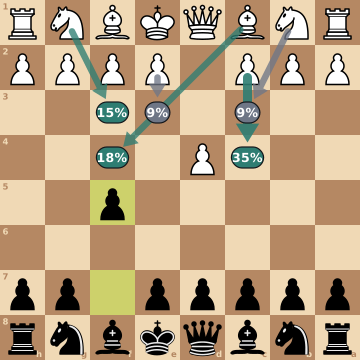
- 2. c4 (35%). c4 grabs more space in the center and gets ready for Nc3.
Your answer: 2...Nf6. Develops, adds a second guard to e4 and covers h5. - 2. Bf4 (18%). White usually follows with e3, Nf3 and sometimes c4.
Your answer: 2...Nf6. Develop and control e4. - 2. Nf3 (15%). White develops Nf3.
Your answer: 2...Nf6. Develop and fight for e4. - 2. e3 (9%). Its favorite square is d3, where it hits your f5 pawn.
Your answer: 2...Nf6. Develop and control e4. - 2. Nc3 (9%). White develops Nc3, preparing e4.
Your answer: 2...Nf6. Control e4 again.
After 1. d4 f5 2. c4 Nf6
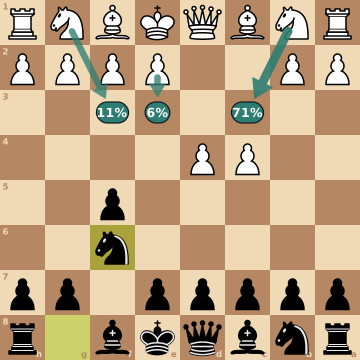
- 3. Nc3 (71%). The knight supports a later e2-e4 push, which is White's main plan against the Dutch.
Your answer: 3...e6. Supports f5 and opens the way for your f8 bishop. - 3. Nf3 (11%). White keeps the choice between Nc3 and g3 for later.
Your answer: 3...g6. The Leningrad setup: your bishop is heading for g7. - 3. e3 (6%). White plays a quiet e3.
Your answer: 3...e6. Supports f5 and opens your f8 bishop.
After 1. d4 f5 2. c4 Nf6 3. Nc3 e6
Every one of White's main moves here gets the same answer: 4...Bb4. The knight on c3 is White's main helper for e4, so pinning it slows White's whole plan down.
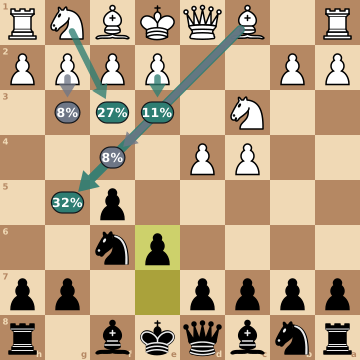
- 4. Bg5 (32%). Bg5 pins the f6 knight to your queen on d8. If the knight goes away, White could win your queen, so the knight is stuck for now.
Your answer: 4...Bb4. Pin back: White's knight on c3 can't move without exposing the king. - 4. Nf3 (27%). The knight heads for the center and prepares castling.
Your answer: 4...Bb4. Pin the c3 knight so it can't support e4. - 4. e3 (11%). White plays e3 to open the f1 bishop.
Your answer: 4...Bb4. Pin the c3 knight and get ready to castle. - 4. Bf4 (8%). Combined with a knight jump to b5, it can threaten your c7 pawn.
Your answer: 4...Bb4. The pin also stops Nb5 ideas against c7. - 4. g3 (8%). White prepares a fianchetto with g3.
Your answer: 4...Bb4. Pin the knight and prepare to castle.
After 1. d4 f5 2. c4 Nf6 3. Nc3 e6 4. Nf3 Bb4
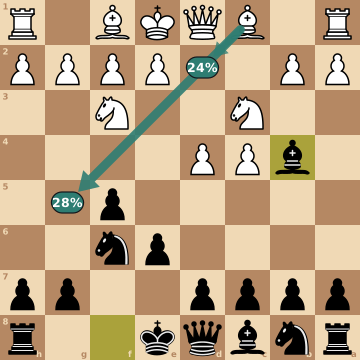
- 5. Bg5 (28%). White pins your knight too with Bg5.
Your answer: 5...O-O. Castle first. Your king is safe and the rook joins the f-file. - 5. Bd2 (24%). If you take on c3 now, White recaptures with the bishop and gets no doubled pawns.
Your answer: 5...O-O. Castle and keep the tension.
After 1. d4 f5 2. Bf4 Nf6
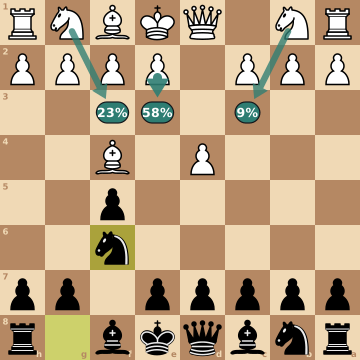
- 3. e3 (58%). White supports d4 with e3.
Your answer: 3...e6. Supports f5 and opens your bishop. - 3. Nf3 (23%). White develops Nf3.
Your answer: 3...e6. Support f5 and prepare to develop the f8 bishop. - 3. Nc3 (9%). The knight supports e4 and can jump to b5 to attack c7 together with the f4 bishop.
Your answer: 3...e6. Supports f5 and opens your f8 bishop.
After 1. d4 f5 2. Nf3 Nf6
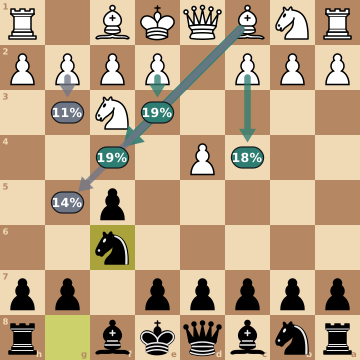
- 3. Bf4 (19%). White develops the bishop to f4.
Your answer: 3...e6. Supports f5 and gets ready to develop. - 3. e3 (19%). White plays a quiet e3.
Your answer: 3...g6. Leningrad setup: bishop to g7 next. - 3. c4 (18%). Nc3 usually comes next.
Your answer: 3...g6. The Leningrad setup. - 3. Bg5 (14%). White develops Bg5 and pressures your knight.
Your answer: 3...e6. Be7. - 3. g3 (11%). White prepares a fianchetto with g3.
Your answer: 3...g6. Mirror White: your bishop goes to g7.
After 1. d4 f5 2. e3 Nf6
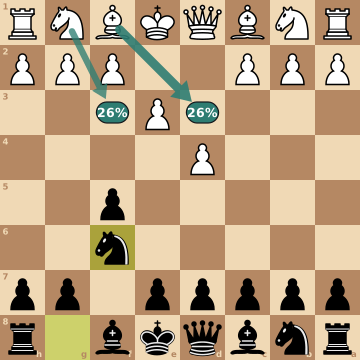
- 3. Bd3 (26%). You need to deal with it now.
Your answer: 3...e6. Protects f5 and opens your f8 bishop. - 3. Nf3 (26%). White develops Nf3.
Your answer: 3...g6. Leningrad setup, with the g6 pawn guarding f5.
After 1. d4 f5 2. Nc3 Nf6
Careful here. Against 3.Bg5 the natural 3...e6 lets White push 4.e4 with a good game. Play 3...d5 instead, so a second pawn keeps e4 under control.
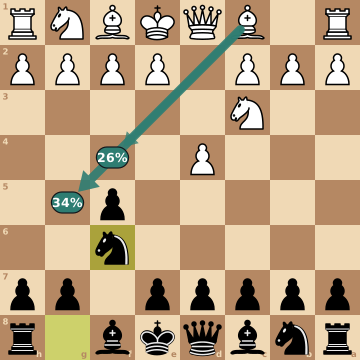
- 3. Bg5 (34%). If the knight disappears, White's e4 push becomes much stronger.
Your answer: 3...d5. Stop e4 for good with a second pawn. - 3. Bf4 (26%). White develops the bishop to f4.
Your answer: 3...e6. Supports f5 and opens your f8 bishop.
Your plan after the opening
Against 2.c4 and 3.Nc3: pin, trade and target the c-pawns
Play ...e6 and ...Bb4. When White plays e3 while the knight is still pinned, take on c3 at once, before White can recapture with a queen on c2. After bxc3 White has two pawns on the c-file that can't protect each other. Follow up with ...d6, ...h6 to question the g5 bishop, castle, then push ...e5 or bring a knight to e4.
At this level Black wins 53% of games after 5...Bxc3+ in this line.
1. d4 f5 2. c4 Nf6 3. Nc3 e6 4. Bg5 Bb4 5. e3 Bxc3+ 6. bxc3 d6 7. Bd3 h6 8. Bxf6 Qxf6 9. Ne2 O-O
Against Nf3 setups: the Leningrad with ...g6 and ...Bg7
When White starts with Nf3 and follows up with c4, e3 or g3, switch to ...g6, ...Bg7, castle and ...d6. The bishop on g7 guards your king and aims down the long diagonal. Your main break is ...e5, often prepared with ...Nc6 or ...Qe8, and a knight on e4 is always welcome.
If White pushes the h-pawn to h5 to attack your g6 pawn, take it with ...Nxh5. Stockfish says you simply win a pawn.
1. d4 f5 2. Nf3 Nf6 3. c4 g6 4. Nc3 d6 5. b4 Bg7 6. e3 O-O 7. Bb2 Ne4
Against the London: ...e6, ...b6 and ...Bb7
In the Dutch your c8 bishop is often stuck behind the e6 and f5 pawns. Against the London, give it a job: ...b6 and ...Bb7, where it controls e4. Then play ...Bd6 to trade off White's active f4 bishop, castle, and put a knight on e4. Stockfish gives White about half a pawn, nothing more.
1. d4 f5 2. Bf4 Nf6 3. e3 e6 4. Nf3 b6 5. Be2 Bb7 6. O-O Bd6 7. c4 Bxf4 8. exf4 Ne4
Traps and common mistakes
Letting White push e4 after 2.Nc3 Nf6 3.Bg5
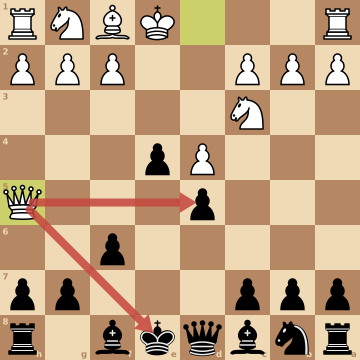
1. d4 f5 2. Nc3 Nf6 3. Bg5 d5 4. e4 fxe4? 5. Bxf6 exf6 6. Qh5+ g6 7. Qxd5
3.Bg5 attacks the knight that guards e4. If you answer 3...e6, White usually pushes 4.e4 and gets the better game. 3...d5 stops that.
Even then, take care if White pushes 4.e4 anyway. Take with the knight, 4...Nxe4. Taking with the pawn loses material: White swaps on f6, checks on h5 and takes on d5, and Stockfish rates White about a pawn better with your pawns broken.
Missing the Nb5 trick against c7
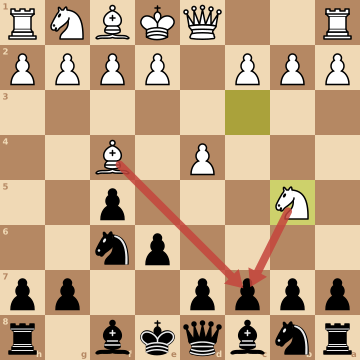
1. d4 f5 2. Bf4 Nf6 3. Nc3 e6 4. Nb5 Bd6? 5. Bxd6 cxd6 6. Nxd6+
When White has a bishop on f4 and a knight on c3, the jump Nb5 hits c7 twice. Block the bishop with 4...d6 and the threat is gone. Stockfish rates that level.
The tempting 4...Bd6? offers a trade, but after 5.Bxd6 cxd6 6.Nxd6+ White has won a pawn and your king has to move.
Answering Qh5+ with ...Kf8
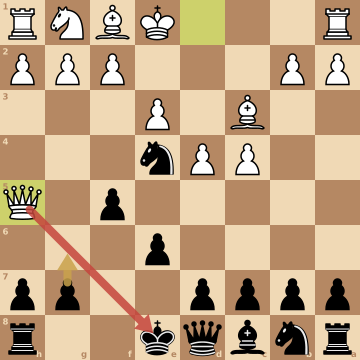
1. d4 f5 2. c4 Nf6 3. Nc3 e6 4. e3 Bb4 5. Bd2 Bxc3 6. Bxc3 Ne4 7. Qh5+ g6
Your knight on e4 is a dream piece, but once it leaves f6, nothing covers h5. When White checks there, block with ...g6, which Stockfish rates level. Stepping aside with ...Kf8? costs you castling and leaves White more than a pawn better.
Taking on c3 when it gains nothing
...Bxc3 is great when White has to take back with a pawn. After 3.Nc3 e6 4.Nf3 Bb4 5.Bd2, though, White recaptures with the bishop and gets no doubled pawns. Just castle and keep the bishop on b4 until White spends a move chasing it.
Frequently asked questions
Is the Dutch Defense good for beginners?
It's better suited to players from about 1200 up than to complete beginners. The plans are simple, but 1...f5 loosens your king, and you need to know a few tricks such as Qh5+ and the Nb5 jump against c7. If you know those, it's a good fighting choice at 1200 to 2000.
What is the most common reply to the Dutch Defense at club level?
At 1200 to 2000 on Lichess, White's most common replies to 1...f5 are 2.c4 (34%), 2.Bf4 (18%), 2.Nf3 (15%), 2.e3 (9%) and 2.Nc3 (8%). Against all of them your next move is 2...Nf6.
Should I play the Classical, the Stonewall or the Leningrad Dutch?
This guide mixes them by White's setup. Against 2.c4 and Nc3 you play ...e6 and ...Bb4. Against Nf3 followed by c4, e3 or g3 you play the Leningrad with ...g6. Against the London you play ...e6 and ...b6. The Stonewall (pawns on c6, d5, e6 and f5) also turns up in some e3 lines, where Stockfish's own suggested moves lead to it.
How do I stop Qh5+ tricks in the Dutch?
Keep your knight on f6 until you've castled, because it covers h5. If the knight has to move and White checks on h5, block with ...g6 rather than moving your king.
What is the best answer to the London System in the Dutch?
Play ...Nf6, ...e6, ...b6 and ...Bb7, then ...Bd6 to trade off White's f4 bishop and castle. A knight on e4 comes next. Stockfish gives White about half a pawn, which is a normal, comfortable position for Black.
Keep learning
- All 36 opening guides: every opening on the site, grouped by what you play as White and Black.
- Is the Dutch Defense (1.d4 f5) good?: A closer look at whether 1...f5 is sound, and who it suits.
- The most reliable 1.d4 defenses for Black: How the Dutch compares with eight other answers to 1.d4.
The Coach plays 1.d4 against you with the moves 1200 to 2000 players actually choose, from 2.c4 to the London, and explains every one of your moves in plain English. Progress tracking is free during the open beta.
Practice the Dutch Defense free →