The Key Pawn Breaks for Black in the French Advance Variation
TL;DR
The two breaks ...c5 hits the base of White's chain (d4). ...f6 hits the head (e5). How common is ...c5? 70.5% of Black players answer 3.e5 with 3...c5 (about 30 million Lichess games at 900 to 1800) Black's follow-up After 4.c3: 4...Nc6 60.1%, 4...cxd4 13.7%, 4...Qb6 12.5%. The pressure is all on d4. When it pays off After 5.Nf3 Qb6 6.Be2 cxd4 7.cxd4 Nge7, 63% of White players castle and 8...Nf5 wins d4. White wins only 40% of those games at 900 to 1800 on Lichess. The alternative plan ...c4 (4...c4 in 5.2% of games) locks the queenside, gives up pressure on d4 and gains space for ...b5-b4. Rule of thumb Hit d4 first. Use ...f6 once your king is ready to castle and your pieces can use the f-file.
The structure you're fighting
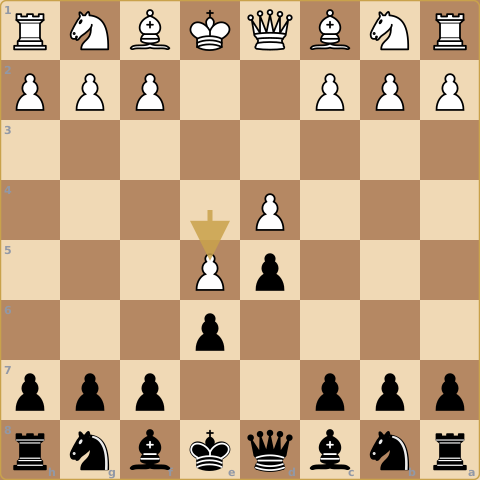
White's pawns on d4 and e5 form a chain pointing at Black's kingside. The pawn on e5 takes away f6 from Black's knight and cramps the kingside. Behind e6, Black's light-squared bishop has nowhere to go.
A pawn chain is only as strong as its base. The old rule, going back to Aron Nimzowitsch, is to attack the chain at its foundation. For Black that means d4. If d4 falls or has to be traded, e5 is left hanging on its own. That's why ...c5 comes first.
Break 1: ...c5, straight at the base
At 900 to 1800 on Lichess, 70.5% of Black players answer 3.e5 with 3...c5. It's the main move at every level, and it should be yours. Anything slower lets White support d4 with c3 and Nf3 in peace and then build on the kingside.
The break doesn't work on its own. After 4.c3, you add pieces to the attack on d4:
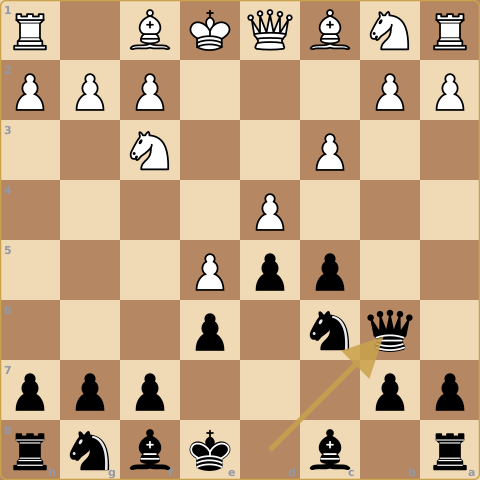
Your usual attackers are the c5 pawn, the knight on c6, the queen on b6 and a second knight that comes via e7 or h6 to f5. In our data, 4...Nc6 is the main move (60.1%), ahead of 4...cxd4 (13.7%) and 4...Qb6 (12.5%). After 5.Nf3 the common tries are 5...Qb6 (49.4%), 5...Bd7 (13.8%), 5...cxd4 (13.3%) and 5...Nge7 (10.2%).
Timing matters when you take on d4. Once you play ...cxd4 and White recaptures cxd4, the c-file opens for your rooks, but White's knight also gets the c3 square. Take when you can use the open file or win something, not by reflex.
Here's what it looks like when the pressure works. After 5...Qb6 6.Be2 cxd4 7.cxd4 Nge7, your knight is heading for f5 to hit d4 a third time. At this level 63% of White players castle anyway, 8...Nf5 wins the pawn, and White wins only 40% of those games on Lichess.
Break 2: ...f6, straight at the head
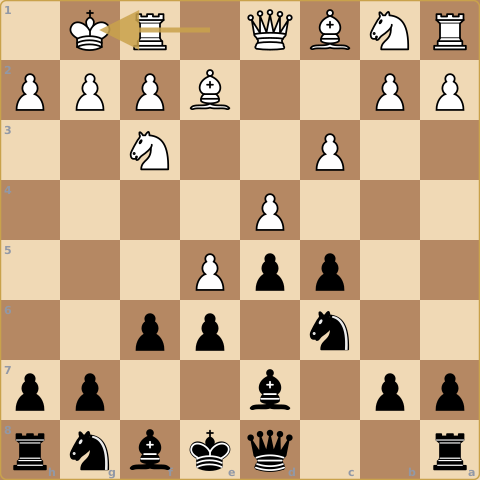
...f6 is the second half of the plan. It challenges e5 directly. If White takes (exf6), Black's pieces come alive: the knight gets f6, the f-file opens for a rook, and Black can think about ...e5 to finally free the bishop. If White doesn't take, Black can take on e5 and leave White with a weak pawn on d4 or e5.
The downside is that ...f6 weakens your king, especially the e6 pawn and the h5-e8 diagonal. That's why it usually comes after ...Bd7 or once your king can castle safely.
At club level you'll also see ...f6 much earlier. After 3...Nc6 4.c3, 25.1% of players at 900 to 1800 hit e5 straight away with 4...f6, and our trainer's line runs 5.Nf3 fxe5 6.Nxe5 Nxe5 7.dxe5. White's d-pawn is gone, so e5 is no longer part of a chain, but Black has spent moves on pawns instead of pieces.
The other plan: ...c4, the lock
In our data 5.2% of Black players push 4...c4 right away, and it's also a standard answer when White plays a3 to prepare b4. It's not a break. It's the opposite: Black stops attacking d4 and closes the queenside, gaining space and stopping b4 from doing much. After that, Black's queenside play comes from ...b5-b4 or ...Na5-b3, and the knight can use the b3 square.
The cost is real. With the c-pawn on c4, d4 is safe forever, so White can turn to the kingside without worrying about the center. Play ...c4 when you have a clear queenside plan, not because you're tired of defending d4.
What about the bad bishop?
All of these breaks are partly about the c8 bishop. There are three common ways to improve it:
- ...Bd7 and ...Bb5. Trade it for White's good light-squared bishop.
- ...f6 and ...e5. Open a diagonal once the center breaks up.
- Accept it. Some of the strongest French players simply keep the bishop as a defender of e6 and d5 and win on the queenside.
A quick checklist for Black
- Play ...c5 on move three. Always.
- Add attackers to d4: ...Nc6, ...Qb6, ...Nge7-f5 or ...Nh6-f5.
- Before ...cxd4, ask if you can use the c-file or if you're just handing White the c3 square.
- Prepare ...f6 with ...Bd7 or castling. Don't play it with your king still in the middle and White's pieces aimed at e6.
- Choose ...c4 only if you have a queenside plan to follow.
Frequently asked questions
What are the main pawn breaks in the French Advance?
Black has two: ...c5, which attacks the base of White's pawn chain on d4, and ...f6, which attacks the head on e5. Black can also lock the queenside with ...c4, which is a different plan rather than a break.
Why does Black play 3...c5 in the French Advance?
To attack d4, the base of White's pawn chain, before White can support it comfortably. At 900 to 1800 on Lichess, 70.5% of Black players choose it after 3.e5.
When should Black play ...f6 in the French Advance?
Usually after preparation, such as ...Bd7 or getting ready to castle. ...f6 frees Black's position, but it also weakens e6 and the king, so it works best when Black's pieces can use the open f-file straight away.
Is ...c4 a good move in the French Advance?
It's a legitimate plan, especially against a3 and b4. It gains queenside space but ends the pressure on d4, so White is free to play on the kingside.
Copy the lines (PGN)
Every line in this article in standard PGN, ready to paste into Lichess, Chess.com or any chess database.
[Event "The Key Pawn Breaks for Black in the French Advance Variation: ...c5 with ...Qb6 pressure"]
[Site "chesscoachacademy.com"]
[Result "*"]

1. e4 e6 2. d4 d5 3. e5 c5 4. c3 Nc6 5. Nf3 Qb6 *

[Event "The Key Pawn Breaks for Black in the French Advance Variation: ...f6 break"]
[Site "chesscoachacademy.com"]
[Result "*"]

1. e4 e6 2. d4 d5 3. e5 c5 4. c3 Nc6 5. Nf3 Bd7 6. Be2 f6 7. O-O *

[Event "The Key Pawn Breaks for Black in the French Advance Variation: ...Nf5 wins d4"]
[Site "chesscoachacademy.com"]
[Result "*"]

1. e4 e6 2. d4 d5 3. e5 c5 4. c3 Nc6 5. Nf3 Qb6 6. Be2 cxd4 7. cxd4 Nge7 8. O-O Nf5 *

[Event "The Key Pawn Breaks for Black in the French Advance Variation: Early ...f6"]
[Site "chesscoachacademy.com"]
[Result "*"]

1. e4 e6 2. d4 d5 3. e5 Nc6 4. c3 f6 5. Nf3 fxe5 6. Nxe5 Nxe5 7. dxe5 *

[Event "The Key Pawn Breaks for Black in the French Advance Variation: ...c4 lock"]
[Site "chesscoachacademy.com"]
[Result "*"]

1. e4 e6 2. d4 d5 3. e5 c5 4. c3 c4 5. Nf3 *
Keep reading
- How to Counter the French Defense as White: The same fight from White's side: holding d4 and using the space.
- What Is the Best Defense Against 1.e4?: How the French and the other defenses compare.
See these breaks from the other side of the board
Our French Advance trainer is built for White, and it's a great way to learn Black's breaks too. Every line shows Black's real replies from what 900 to 1800 rated players play on Lichess (about 30 million games), so you'll see ...c5, ...Qb6, ...f6 and ...c4 come at you in the order they happen in practice, with a note on each move explaining what it does.
It's free during the open beta, and you can track your progress for free by creating an account.
15 lines from 30 million Lichess games. Free during the open beta, with free progress tracking.
Practice the French Advance free →