The Modern Defense at 900 to 1800: How to Play 1...g6 Against Real Club Opponents
TL;DR: the data
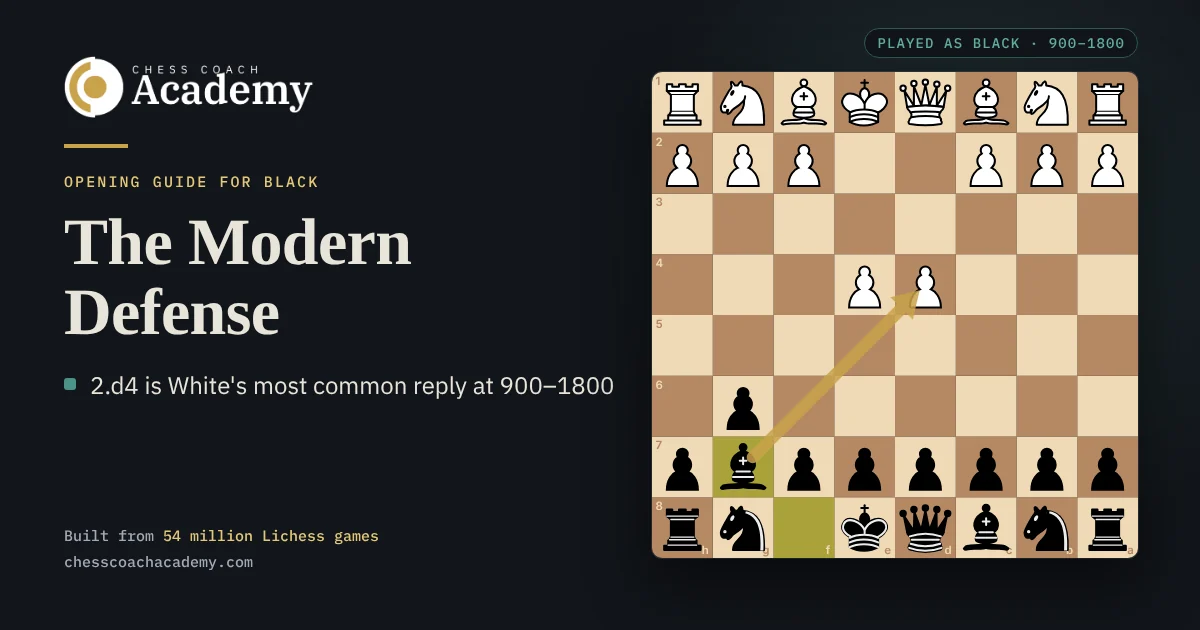
Built from 54 million Lichess games played by 900 to 1800 rated players You play Black, 20 practice lines, every move of yours checked by Stockfish Most common line 1. e4 g6 2. d4 Bg7 3. Nf3 d6 4. Nc3 Nf6 Replies to 2...Bg7 3. Nf3 41% · 3. e5 23% · 3. c3 7% Worth knowing After 2.Bc4 Bg7 3.Qf3 e6, Black wins 53% of games.
The Modern Defense starts with 1...g6. You don't fight for the center with pawns straight away. Instead your bishop goes to g7, where it stares down the long diagonal at White's center, and then you add ...d6, usually ...Nf6, and castle. White gets space, and you get targets.
This guide is built from 54 million Lichess games at 900 to 1800. At that level only about 2.5% of players answer 1.e4 with 1...g6, so your opponents rarely know what to do against it. They tend to do one of two things: push e5 early, or go straight for your f7 pawn with a bishop, queen or knight. Both have clear answers, and this guide shows you each one.
1. e4 g6 2. d4 Bg7
Practice the Modern Defense free →Who it's for
Players rated roughly 900 to 1800 who want one flexible setup against 1.e4 and don't mind letting White build a center. You'll need to be comfortable playing with a little less space, then hitting back with ...c5 or ...e5.
It's a good fit if you'd rather avoid long forcing theory. Many lines here end with ...Nf6, reaching the same positions as the Pirc Defense, so if you ever add the Pirc later, most of the work is already done.
Why it works at 900 to 1800
- The setup barely changes: ...g6, ...Bg7, ...d6, then ...Nf6 and castle. Only White's move order decides when each move comes.
- White's early aggression at this level is often wrong. 3.e5 can be hit right away with ...d6, and the early attacks on f7 are stopped by one pawn move, ...e6.
- Your bishop on g7 is a strong piece all game, both against White's center and as a guard for your castled king.
- White has more space, and in most main lines Stockfish rates White slightly better. You win by counterattacking, not by waiting.
- White's setup with Be3, Qd2 and Bh6 aims to trade off your g7 bishop and attack your king. You must react with ...c5 in time.
- Your f7 pawn is a target early on. You need to spot Qf3 and Ng5 ideas every time a White bishop lands on c4.
What 900 to 1800 players actually play
Here's what White plays after 1.e4 g6 2.d4 Bg7 at 900 to 1800. The calm 3.Nf3 leads at 41%. The big one to prepare for is 3.e5 at 23%: almost a quarter of players push past your pawns at once. After that the choices spread out, with 3.c3 and 3.Nc3 at 7% each, and 3.Be3 and 3.c4 at 6% each. All of them get the same answer, 3...d6, but the plan after it changes.
Three facts from the data worth remembering:
- At this rating range, 1...g6 is played in about 2.5% of games after 1.e4.
- White's most common replies to 1...g6 are 2.d4 (38%), 2.Nf3 (29%), 2.Bc4 (10%) and 2.Nc3 (6%).
- After 2.Bc4 Bg7 3.Qf3 e6, Black wins 53% of games.
How to play the Modern Defense: move by move
Each board below is a position from the practice lines, shown from your side. The arrows are White's most common replies at 900 to 1800, labeled with how often each one is played in that exact position. Under each board you'll find why White plays it and the answer the Coach teaches.
After 1. e4 g6
Your answer to all four common replies is the same: 2...Bg7. What changes is which White move you need to watch for next.
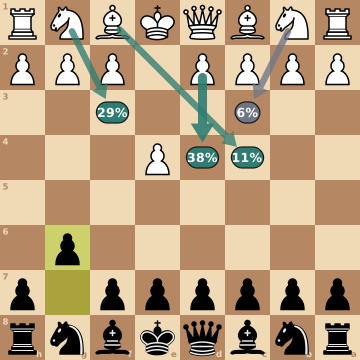
- 2. d4 (38%). d4 puts two pawns side by side in the center. That's exactly what the Modern invites: White gets space, and you get targets to hit later.
Your answer: 2...Bg7. The bishop takes its place and eyes d4. - 2. Nf3 (29%). White keeps the choice of d4 for later.
Your answer: 2...Bg7. Fianchetto your bishop. - 2. Bc4 (11%). Watch for White's queen joining in.
Your answer: 2...Bg7. Develop, but keep an eye on f7. - 2. Nc3 (6%). White can choose Nf3 or d4 next.
Your answer: 2...Bg7. Fianchetto your bishop.
After 1. e4 g6 2. d4 Bg7
The main Modern position. Answer every reply with 3...d6. Against 3.e5 it attacks the pawn at once, and against everything else it stops e5 and frees your c8 bishop.
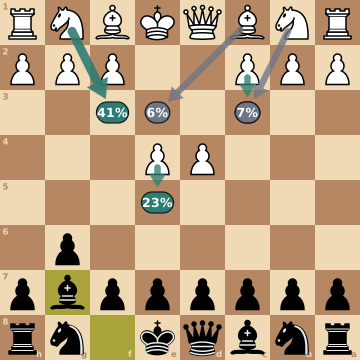
- 3. Nf3 (41%). The knight guards d4, so your bishop's pressure isn't a problem for White yet.
Your answer: 3...d6. Control e5 and open your other bishop. - 3. e5 (23%). But the pawn is far from home and needs support.
Your answer: 3...d6. Hit the e5 pawn straight away. - 3. c3 (7%). White supports d4 with c3.
Your answer: 3...d6. Control e5 and free your c8 bishop. - 3. Nc3 (7%). White can choose Be3, f4 or Nf3 next.
Your answer: 3...d6. Control e5 and keep your options open. - 3. Be3 (6%). White develops Be3, guarding d4.
Your answer: 3...d6. Control e5 and keep your options open. - 3. c4 (6%). It's ambitious, but those pawns can become targets.
Your answer: 3...d6. Hold e5 and prepare to hit back.
After 1. e4 g6 2. d4 Bg7 3. Nf3 d6
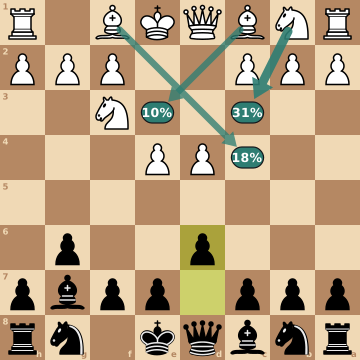
- 4. Nc3 (31%). White develops Nc3, protecting e4 in advance.
Your answer: 4...Nf6. Develop, and now you're in the Pirc Defense. - 4. Bc4 (18%). White develops Bc4, aiming at f7.
Your answer: 4...Nf6. Develop and attack e4. - 4. Be3 (10%). White develops Be3, guarding d4.
Your answer: 4...Nf6. Develop and attack e4.
After 1. e4 g6 2. d4 Bg7 3. e5 d6
White's e5 pawn is attacked twice, by your d6 pawn and your bishop. Take it on the next move whatever White does, and don't put your knight on f6 while the pawn is still there.
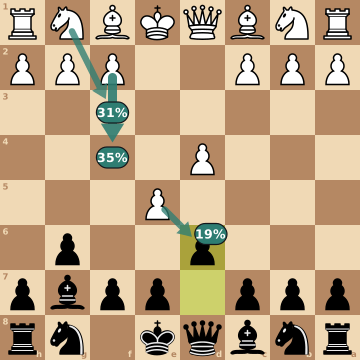
- 4. f4 (35%). White supports e5 with f4.
Your answer: 4...dxe5. Take the pawn. - 4. Nf3 (31%). Nf6??
Your answer: 4...dxe5. Take the pawn. - 4. exd6 (19%). You can take back three ways, and all of them are fine.
Your answer: 4...cxd6. Take back toward the center.
After 1. e4 g6 2. Nf3 Bg7
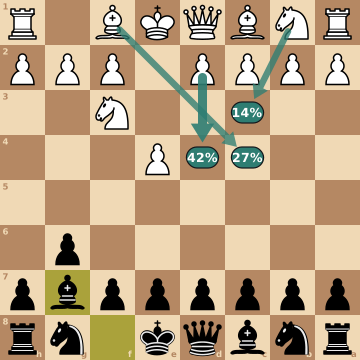
- 3. d4 (42%). Nf3.
Your answer: 3...d6. Control e5 and free your c8 bishop. - 3. Bc4 (27%). With the knight on f3, White may try Ng5 to attack f7 twice.
Your answer: 3...d6. Open your c8 bishop and control e5. - 3. Nc3 (14%). White develops Nc3.
Your answer: 3...d6. Control e5 and free your c8 bishop.
After 1. e4 g6 2. Nf3 Bg7 3. d4 d6
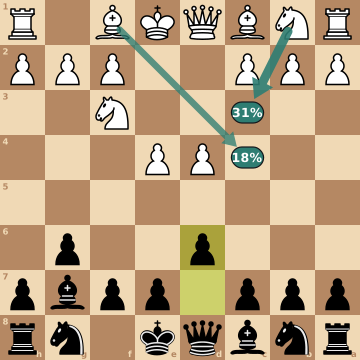
- 4. Nc3 (31%). White develops Nc3, protecting e4 in advance.
Your answer: 4...Nf6. Develop, and you're in the Pirc Defense. - 4. Bc4 (18%). White develops Bc4, aiming at f7.
Your answer: 4...Nf6. Develop and attack e4.
After 1. e4 g6 2. Nf3 Bg7 3. Bc4 d6
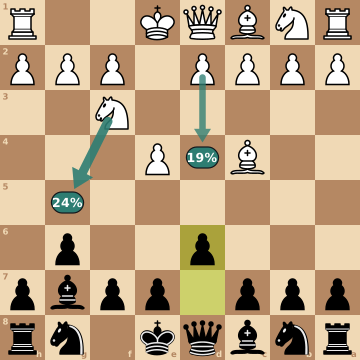
- 4. Ng5 (24%). Only your king defends f7.
Your answer: 4...e6. Block the bishop and f7 is safe. - 4. d4 (19%). Bc4.
Your answer: 4...Nf6. Develop and attack e4.
After 1. e4 g6 2. Bc4 Bg7
White's bishop is already on c4, so Qf3 threatens mate on f7. It's the most common move here, and 3...e6 is the answer.
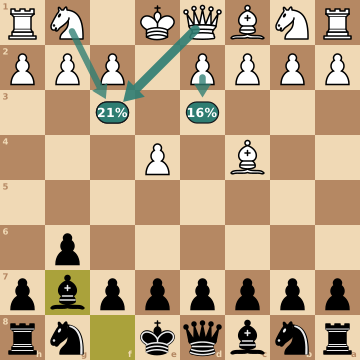
- 3. Qf3 (30%). White brings the queen to f3, threatening mate on f7.
Your answer: 3...e6. Block the bishop and stop the mate. - 3. Nf3 (21%). Bc4.
Your answer: 3...d6. Open your c8 bishop and control e5. - 3. d3 (16%). White supports e4 with d3.
Your answer: 3...d6. Develop calmly.
After 1. e4 g6 2. Nc3 Bg7
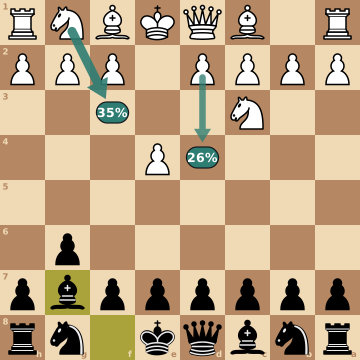
- 3. Nf3 (35%). Nc3.
Your answer: 3...d6. Control e5 and free your c8 bishop. - 3. d4 (26%). Nc3.
Your answer: 3...d6. Control e5 and keep your options open.
Your plan after the opening
The main line: ...d6, ...Nf6, castle, then ...c5
Against calm development you reach the Pirc Defense's main position after ...Nf6. Castle next. If White goes for Be3 and Qd2, hit the center at once with ...c5. White can win a pawn after dxc5 dxc5 and Bxc5, but your pieces come out fast and Stockfish rates White only slightly better.
1. e4 g6 2. d4 Bg7 3. Nf3 d6 4. Nc3 Nf6 5. Be3 O-O 6. Qd2 c5
Against 3.e5: attack the pawn straight away
Play 3...d6 and take on e5 next move. If White props the pawn up with 4.f4, take with 4...dxe5 5.fxe5 and then play 5...c5: d4 is the only thing holding up e5, and your bishop is waiting to take it. Stockfish rates you slightly better, close to a pawn.
If White plays 4.Nf3 instead, take on e5 as well. After 5.dxe5 Qxd1+ 6.Kxd1 Nc6 White can't castle and the e5 pawn is weak. Against 4.exd6, recapture 4...cxd6 and the position is level.
1. e4 g6 2. d4 Bg7 3. e5 d6 4. f4 dxe5 5. fxe5 c5
Against 3.Be3 and 3.Nc3: a flexible ...c6 setup
When White is aiming for Qd2 and Bh6, Stockfish's suggested setup keeps the knight off f6 for a while: ...d6, ...c6, ...Nd7 and then ...Ngf6 and castle. Later, ...b5 or ...e5 gives you play. If White goes for Bh6 early, don't wait. Hit d4 with ...c5.
1. e4 g6 2. d4 Bg7 3. Be3 d6 4. Nc3 c6 5. Nf3 Nd7 6. a4 Ngf6
Against 2.Bc4 with d3: an easy game
If White plays quietly with 2.Bc4 Bg7 3.d3, just develop: ...d6, ...c5, ...Nc6, ...Nf6 and castle. The position is level. If White's queen comes to f3 at any point, block f7 with ...e6 or ...Nf6 before anything else.
Traps and common mistakes
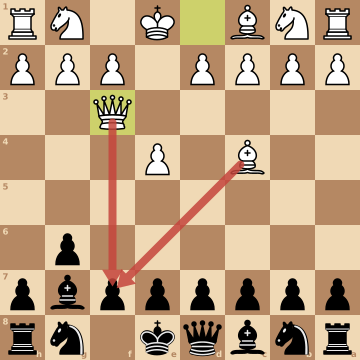
Ignoring the mate threat after 2.Bc4 Bg7 3.Qf3
1. e4 g6 2. Bc4 Bg7 3. Qf3 d6?? 4. Qxf7+ Kd7 5. Qxg7
3.Qf3 is White's most common move after 2.Bc4 Bg7 (30%). The queen and bishop both aim at f7, and Qxf7 is checkmate if you don't react. The natural developing move 3...d6?? loses heavily: 4.Qxf7+ Kd7 5.Qxg7 wins your bishop and your rook is next.
Play 3...e6. The pawn cuts the bishop off from f7, so Qxf7+ would just lose the queen to your king. After 3...e6, Black wins 53% of games at 900 to 1800.
Playing ...Nf6 with White's knight on g5
1. e4 g6 2. Nf3 Bg7 3. Bc4 d6 4. Ng5 e6 5. Qf3 Qxg5
After 2.Nf3 Bg7 3.Bc4 d6, 24% of White players jump 4.Ng5, attacking f7 twice. The usual ...Nf6 is a blunder here: 4...Nf6?? 5.Nxf7 forks your queen and rook.
Block with 4...e6. If White now adds the queen with 5.Qf3 to threaten mate, 5...Qxg5! simply takes the knight, and the threat is gone. Later, ...h6 kicks the knight away if it stays on g5.
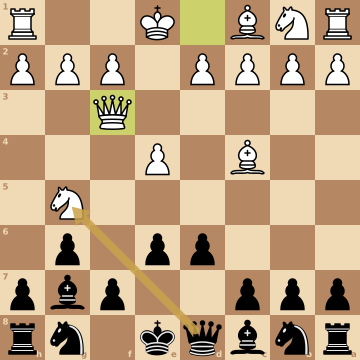
Playing ...Nf6 while White's pawn is on e5
1. e4 g6 2. d4 Bg7 3. e5 d6 4. Nf3 dxe5
After 3.e5 d6 4.Nf3 it's natural to bring out the knight, but 4...Nf6?? walks straight into 5.exf6 and you've lost a piece. Take the pawn first with 4...dxe5. Your knight can come to f6 later, once the e5 pawn is gone.
Waiting against Be3, Qd2 and Bh6
If White trades off your g7 bishop with Bh6, your king loses its best defender and White's queen arrives on h6. Don't spend those moves on slow development. Hit the center with ...c5 as soon as White commits to this plan, so White has to deal with d4 first.
Frequently asked questions
Is the Modern Defense good for beginners?
It's playable from about 900 upward. The setup is easy to remember, and at this level White often goes wrong with early e5 pushes or f7 attacks that you can meet with simple moves. It's less suitable if you don't like having less space for the first part of the game.
What is the most common reply to the Modern Defense?
At 900 to 1800 on Lichess, White's most common replies to 1...g6 are 2.d4 (38%), 2.Nf3 (29%), 2.Bc4 (10%) and 2.Nc3 (6%). After 2.d4 Bg7, the most common third move is 3.Nf3 (41%), with 3.e5 next at 23%.
What's the difference between the Modern Defense and the Pirc?
In the Modern you start with ...g6 and ...Bg7 and keep the knight on g8 for longer. In the Pirc you play ...d6 and ...Nf6 first. Many Modern lines end with ...Nf6 and reach the exact same positions as the Pirc.
How do you play against 3.e5 in the Modern Defense?
Attack the pawn with 3...d6 and take it next move. Against 4.f4, take and follow up with ...c5 to undermine d4, and Stockfish rates you slightly better. Never play ...Nf6 while the pawn is still on e5, because exf6 wins your knight.
What do you do against an early Qf3 in the Modern Defense?
Block the attack on f7 with ...e6. After 2.Bc4 Bg7 3.Qf3 e6, Black wins 53% of games at 900 to 1800, because White's queen has come out early and becomes a target. Then develop with ...Ne7, ...Nbc6 and castle.
Keep learning
- All 36 opening guides: every opening on the site, grouped by what you play as White and Black.
- Pirc vs Modern Defense: Which Should You Play Against 1.e4?: Where the two openings meet, and which one fits your style.
- What Is the Best Defense Against 1.e4?: How the Modern compares with six other defenses.
- Best Chess Openings for Beginners: Where the Modern fits among openings grouped by rating.
The Coach plays White against your Modern Defense with the moves 900 to 1800 players actually choose, including 3.e5 and the early attacks on f7, and explains every move in plain English. Progress tracking is free during the open beta.
Practice the Modern Defense free →