The Pirc Defense for 750 to 1800 Players: A Flexible Answer to 1.e4, Built From Real Games
TL;DR: the data
Built from 63 million Lichess games played by 750 to 1800 rated players You play Black, 17 practice lines, every move of yours checked by Stockfish Most common line 1. e4 d6 2. d4 Nf6 3. Nc3 g6 4. Nf3 Bg7 5. Bc4 O-O Replies to 3...g6 4. Nf3 34% · 4. Bg5 19% · 4. f4 9% Worth knowing After 2.d4 Nf6 3.e5? dxe5 4.dxe5 Qxd1+ 5.Kxd1, Black wins 62% of games.
The Pirc is a counterpunch. You answer 1.e4 with the small move 1...d6, bring your knight to f6 to hit e4, then put your bishop on g7 and castle. White gets a big pawn center, and your job is to attack it later with ...c5 or ...e5, once your king is safe.
This guide is built from 63 million Lichess games at 750 to 1800. At that level only about 3% of players answer 1.e4 with 1...d6, so most of your opponents have never prepared for it. That shows in the data: early e5 pushes and loose e4 pawns are common, and each one has a clear punishment. Against calm, sensible development you get a solid position where White has a little more space and you have plenty of play.
1. e4 d6 2. d4 Nf6 3. Nc3 g6
Practice the Pirc Defense free →Who it's for
Players rated roughly 750 to 1800 who don't mind giving White some space early and like hitting back later. If you enjoy positions where both sides have a plan and the game is decided in the middlegame, the Pirc fits.
It's also good if you want to avoid your opponent's preparation. Few players at this level have ever faced 1...d6, and the setup (...Nf6, ...g6, ...Bg7, castle) is the same against most of what they try.
Why it works at 750 to 1800
- One setup covers most lines: ...Nf6, ...g6, ...Bg7 and castle. Then choose ...c5 or ...e5 against White's center.
- Your opponents go wrong early. After 2.d4 Nf6, 9% push 3.e5, and after 2.Nf3 Nf6 some players leave e4 hanging with 3.Bc4 or 3.d4.
- Your king is very safe once it has castled behind the g7 bishop, and the bishop itself is a strong piece for the whole game.
- White has more space. In most main lines Stockfish rates White slightly better, so you need to be patient and know your pawn breaks.
- The aggressive setups (4.f4, or 4.Be3 with Qd2 and Bh6) come at your king. You can't just sit and wait against them.
- You must remember one detail: when White pushes e5 against your knight on f6, take the pawn first. Playing ...g6 there loses the knight.
What 750 to 1800 players actually play
Here's what White plays once you've set up with 3...g6, at 750 to 1800. The calm 4.Nf3 is the favorite at 34%, and it's the easiest line to play against. 4.Bg5 (19%) is next, then the aggressive 4.f4 at 9%. 4.Bc4, 4.Be3 and 4.e5 each show up in 6% of games. Notice that 4.e5 is actually a mistake: you take the pawn and trade queens, and the White pawn left on e5 becomes a target.
Three facts from the data worth keeping in mind:
- At this rating range, 1...d6 is played in about 3% of games after 1.e4.
- White's most common replies to 1...d6 are 2.d4 (41%), 2.Nf3 (31%), 2.Bc4 (9%) and 2.Nc3 (6%).
- After 2.d4 Nf6 3.e5? dxe5 4.dxe5 Qxd1+ 5.Kxd1, Black wins 62% of games.
How to play the Pirc Defense: move by move
Every board below is from the practice lines, shown from your side. The arrows are White's most common replies at 750 to 1800, labeled with how often each one is played in that exact position. Under each board you'll find why White plays it and the answer the Coach teaches.
After 1. e4 d6
Four replies are common here. 2.d4 and 2.Nf3 make up most of your games, and both are met with 2...Nf6.
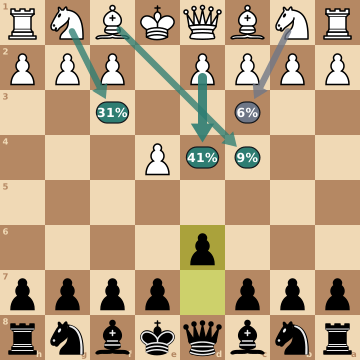
- 2. d4 (41%). d4 puts two pawns side by side in the center. This is exactly what the Pirc invites: White gets space, and you get targets to attack later.
Your answer: 2...Nf6. Develop and attack the e4 pawn right away. - 2. Nf3 (31%). White keeps the choice of d4 for later.
Your answer: 2...Nf6. Develop and attack e4. - 2. Bc4 (9%). White develops Bc4 straight away.
Your answer: 2...Nf6. Develop and attack e4. - 2. Nc3 (6%). White can still choose d4 or Nf3 next.
Your answer: 2...Nf6. Develop your knight.
After 1. e4 d6 2. d4 Nf6
Your knight attacks e4, so White has to defend it or push past it. The push 3.e5 is a mistake, and this is where you punish it.
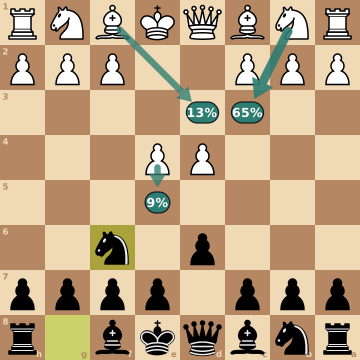
- 3. Nc3 (65%). Nc3 protects e4 and develops a piece at the same time.
Your answer: 3...g6. Make room for your bishop on g7. - 3. Bd3 (13%). White defends e4 with Bd3.
Your answer: 3...g6. Same plan: bishop to g7, then castle. - 3. e5 (9%). e5? looks aggressive, but White's pawn can simply be taken.g6??exf6.
Your answer: 3...dxe5. Take the pawn.
After 1. e4 d6 2. d4 Nf6 3. Nc3 g6
The main Pirc position. Your answer to almost everything here is 4...Bg7. The one exception is 4.e5, where you must take the pawn first.
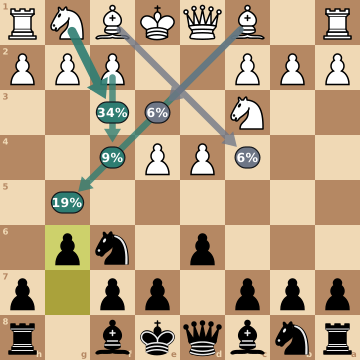
- 4. Nf3 (34%). White just develops and castles instead of attacking straight away.
Your answer: 4...Bg7. The bishop takes its place on the long diagonal. - 4. Bg5 (19%). The bishop hits your f6 knight. Your knight is still defended by the e7 pawn, so there's no danger yet.
Your answer: 4...Bg7. Stick to the plan and get ready to castle. - 4. f4 (9%). f4 puts a third pawn in the center and gets ready to push e4-e5, kicking your knight.
Your answer: 4...Bg7. Finish your development and get ready to castle. - 4. Bc4 (6%). White develops Bc4 early, aiming at f7.
Your answer: 4...Bg7. Develop first. Don't grab e4 yet. - 4. Be3 (6%). White plays Be3, planning Qd2 and an attack.
Your answer: 4...Bg7. Keep your bishop on its best diagonal. - 4. e5 (6%). e5? attacks the knight, but it gives up White's small edge.exf6 simply wins your knight.
Your answer: 4...dxe5. Take the pawn, and the knight is safe.
After 1. e4 d6 2. Nf3 Nf6
The e4 pawn is attacked and nothing defends it yet. 3.Bc4 and 3.d4 both leave it hanging, so take it. Against 3.Nc3 you switch to a solid ...e5 setup instead of the fianchetto.
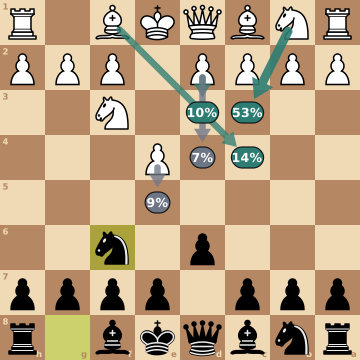
- 3. Nc3 (53%). White defends e4 with Nc3.
Your answer: 3...e5. Claim your share of the center. - 3. Bc4 (14%). Bc4? aims at f7, but nothing protects the e4 pawn.
Your answer: 3...Nxe4. Take the free pawn. - 3. d3 (10%). White defends e4 with d3.
Your answer: 3...g6. Fianchetto your bishop. - 3. e5 (9%). g6??exf6 just wins the knight.
Your answer: 3...dxe5. Take the pawn. - 3. d4 (7%). d4? is the Roscher Gambit: White gives up the e4 pawn for faster development.
Your answer: 3...Nxe4. Take the pawn.
After 1. e4 d6 2. Bc4 Nf6
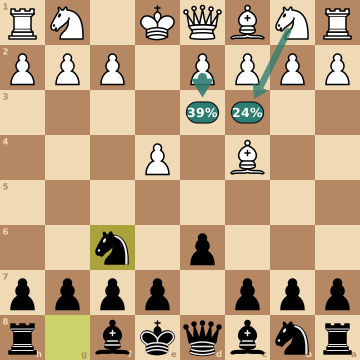
- 3. d3 (39%). Solid, but a bit passive.
Your answer: 3...g6. Fianchetto and get ready to castle. - 3. Nc3 (24%). White defends e4 with Nc3.
Your answer: 3...c6. Prepare d5, hitting the bishop.
After 1. e4 d6 2. Nc3 Nf6
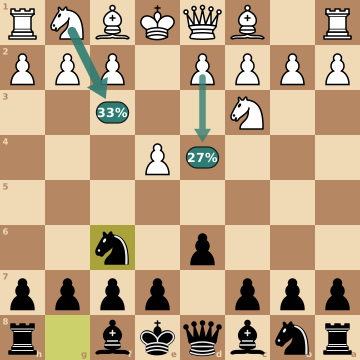
- 3. Nf3 (33%). Nc3.
Your answer: 3...e5. Take your share of the center. - 3. d4 (27%). Nc3.
Your answer: 3...g6. Back to the main Pirc setup.
Your plan after the opening
Against the calm 4.Nf3: castle, then use the fork trick
Play ...Bg7 and castle before you do anything else. When White puts a bishop on c4 and castles, a neat trick appears: 6...Nxe4! 7.Nxe4 d5 attacks the bishop and the knight at once, and you win the piece back with a freer game. If White drops the bishop back to b3 instead, a typical plan is ...Nc6, ...Na5 to go after the bishop, and ...c5 against the center.
1. e4 d6 2. d4 Nf6 3. Nc3 g6 4. Nf3 Bg7 5. Bc4 O-O 6. O-O Nxe4 7. Nxe4 d5
Against 4.f4 and 4.Bg5: hit the center with ...c5
In the aggressive lines White's pawns rush forward, and that leaves them loose. Against 4.f4, finish with ...Bg7. If White pushes 5.e5, drop the knight back with 5...Nfd7 and follow up with ...c5 to attack the chain. Stockfish rates that about level. Against 4.Bg5, play ...Bg7, then ...h6 to ask the bishop what it wants, and ...c5 against d4.
Against 4.Be3 and Qd2: counterattack on the queenside
This is the most dangerous line in the guide. White wants Bh6 to trade off your g7 bishop and then attack your king. Don't wait for it. Play ...c6 and ...Qa5, then ...b5 or ...c5, so White has to worry about the center and the queenside too.
1. e4 d6 2. d4 Nf6 3. Nc3 g6 4. Be3 Bg7 5. Qd2 c6 6. Bh6 Bxh6 7. Qxh6 Qa5
Against 2.Nf3 and 3.Nc3: a solid ...e5 center
When White develops both knights without d4, the Coach switches to ...e5 instead of the fianchetto. Your pawn on e5 is backed by d6, the knight goes to d7 to support it, and the bishop goes to e7 so you can castle. Castle quickly, because a White bishop on c4 will be looking at f7. Later, ...c6 gives you more space.
1. e4 d6 2. Nf3 Nf6 3. Nc3 e5 4. d4 Nbd7 5. Bc4 Be7
Traps and common mistakes
Playing ...g6 when White pushes e5
1. e4 d6 2. d4 Nf6 3. e5 dxe5 4. dxe5 Qxd1+ 5. Kxd1 Ng4
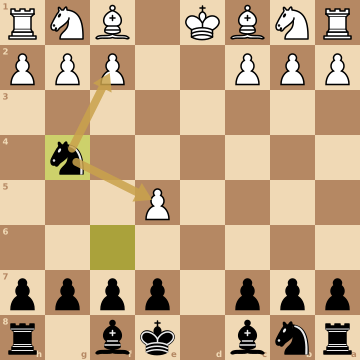
After 2.d4 Nf6, 9% of White players push 3.e5 at your knight. If you carry on with 3...g6??, then 4.exf6 wins the knight. Take the pawn first with 3...dxe5. After 4.dxe5 Qxd1+ 5.Kxd1 White's king is stuck in the middle and can't castle, and 5...Ng4 attacks both e5 and f2. At 750 to 1800, Black wins 62% of games after 5.Kxd1.
Watch for a bonus: if White answers with 6.f4?? or 6.Nf3??, your knight lands on f2 with check and forks the king and the rook on h1.
Grabbing e4 before you castle
1. e4 d6 2. d4 Nf6 3. Nc3 g6 4. Bc4 Nxe4? 5. Bxf7+ Kxf7 6. Nxe4
With White's bishop on c4, the e4 pawn looks free, but 4...Nxe4? runs into 5.Bxf7+! After 5...Kxf7 6.Nxe4 White has the material back and your king has lost the right to castle. Finish ...Bg7 and castle first. Once your rook guards f7, the same capture on e4 often works as a fork trick with ...d5.
Missing the free pawn after 2.Nf3 Nf6 3.Bc4
1. e4 d6 2. Nf3 Nf6 3. Bc4 Nxe4 4. d3 Nf6 5. Ng5 d5
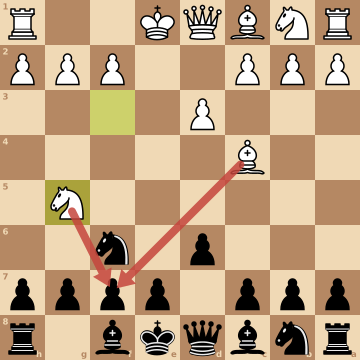
3.Bc4 (14% of games) leaves e4 with no defender, so take it. If White tries 4.Bxf7+ Kxf7 5.Ng5+, your knight simply takes on g5 and you're two pieces up. The usual reply is 4.d3, and your knight goes back to f6, a clean pawn up.
Then comes the real test: 5.Ng5 threatens Nxf7, forking your queen and rook, and the bishop on c4 also hits f7. Block the bishop with 5...d5 (or 5...e6) and you stay a pawn ahead.
Waiting too long against 4.Be3
After 4.Be3 White plans Qd2 and Bh6 to trade off your g7 bishop, the main defender of your king. If you spend those moves on quiet development, White gets the attack for free. Start your own play early instead: ...c6, ...Qa5 and then ...b5 or ...c5, so White has to deal with threats too.
Frequently asked questions
Is the Pirc Defense good for beginners?
It works well from about 750 upward, as long as you're comfortable giving White some space. The setup is easy to remember, and at this level White often goes wrong early with e5 pushes or by leaving e4 undefended. The tricky part is the middlegame, where you need to know when to play ...c5 or ...e5.
What is the most common reply to the Pirc at club level?
At 750 to 1800 on Lichess, 2.d4 is the most common reply (41%), followed by 2.Nf3 (31%), 2.Bc4 (9%) and 2.Nc3 (6%). After 2.d4 Nf6, White defends e4 with 3.Nc3 in 65% of games.
What's the difference between the Pirc and the Modern Defense?
In the Pirc you play ...d6 and ...Nf6 early, so your knight puts pressure on e4 at once. In the Modern you play ...g6 and ...Bg7 first and keep the knight at home for longer. The two often reach similar positions.
How do you play against the Austrian Attack in the Pirc?
Finish your setup with ...Bg7 and castle. If White pushes 5.e5, retreat with 5...Nfd7 and hit the pawn chain with ...c5, which Stockfish rates about level. Against 5.Nf3, castle and develop with ...Nc6 and ...Bg4.
What should Black do if White pushes e5 early in the Pirc?
Take the pawn with ...dxe5 before anything else. After 2.d4 Nf6 3.e5 dxe5 4.dxe5 Qxd1+ 5.Kxd1, White's king can't castle, and Black wins 62% of games from there at 750 to 1800. After 2.Nf3 Nf6 3.e5 dxe5 4.Nxe5, challenge the knight with 4...Nbd7.
Keep learning
- All 36 opening guides: every opening on the site, grouped by what you play as White and Black.
- Pirc vs Modern Defense: Which Should You Play Against 1.e4?: Where the two openings meet, and which one fits your style.
- What Is the Best Defense Against 1.e4?: How the Pirc compares with six other defenses.
- Best Chess Openings for Beginners: Where the Pirc fits among openings grouped by rating.
The Coach plays White against your Pirc with the moves 750 to 1800 players actually choose, including the early e5 pushes, and explains every move in plain English. Progress tracking is free during the open beta.
Practice the Pirc Defense free →