The Scotch Game: How 900 to 1800 Players Really Answer 3.d4
TL;DR: the data
Built from 73 million Lichess games played by 900 to 1800 rated players You play White, 16 practice lines, every move of yours checked by Stockfish Most common line 1. e4 e5 2. Nf3 Nc6 3. d4 exd4 4. Nxd4 Nxd4 5. Qxd4 d6 6. Nc3 Nf6 7. Bf4 Replies to 5.Qxd4 5...d6 31% · 5...Nf6 24% · 5...c5 15% Worth knowing Against 4...Bc5, 5.Be3 wins 54% of games for White at this level, compared with 47% for the more popular 5.Nxc6.
The Scotch Game is the direct way to meet 1...e5. Instead of building up slowly with c3 and d3, you hit Black's center on move three with 3.d4. After 3...exd4 4.Nxd4 you have a pawn on e4, a knight in the middle of the board and more space, and Black has no central pawn left at all.
Most guides teach the Scotch from games between masters, where Black plays the sharp 4...Nf6 or 4...Bc5 lines. This one is built from 73 million Lichess games played by 900 to 1800 rated players, and that changes the picture. At this level, half of the players who take on d4 simply trade knights with 4...Nxd4. It looks harmless, but it brings your queen to d4, and three of Black's five most common follow-ups are mistakes you can punish.
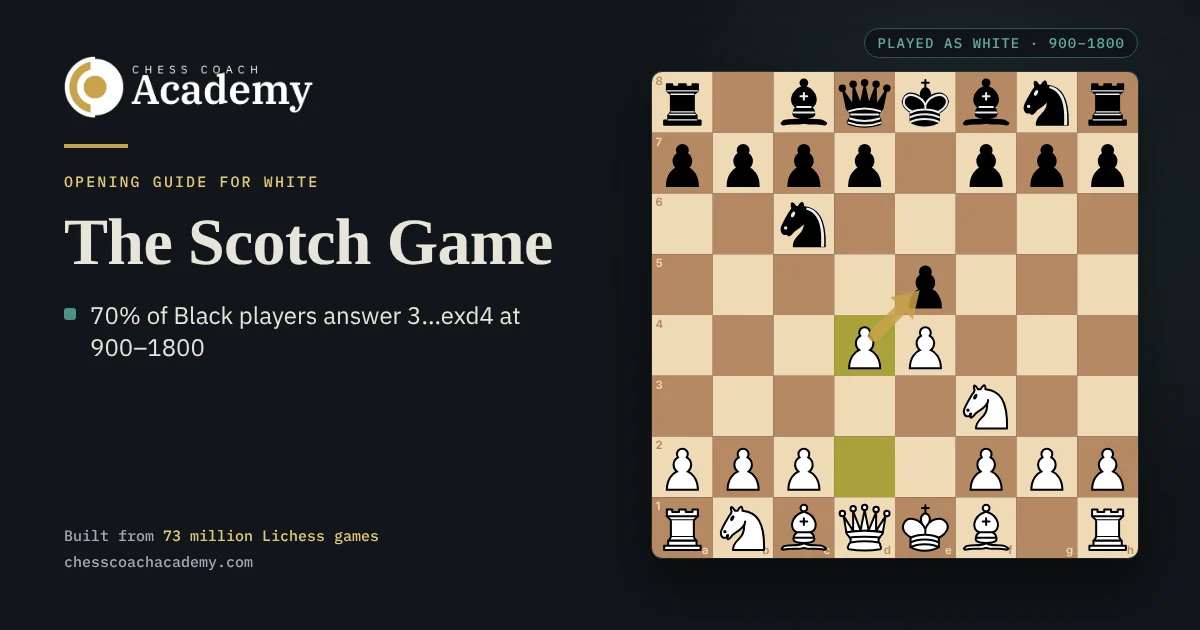
1. e4 e5 2. Nf3 Nc6 3. d4 exd4 4. Nxd4
Practice the Scotch Game free →Who it's for
Players rated roughly 900 to 1800 who like open positions and clear plans. The Scotch asks you to count attackers and defenders on d4, develop quickly and, in many lines, castle queenside. There is much less slow maneuvering than in the Italian or the Ruy Lopez.
It suits you if you'd rather decide the character of the game yourself on move three than wait to see what Black does. If you enjoy long, quiet buildups, the Italian with d3 may feel more natural.
Why it works at 900 to 1800
- The most common line is your best friend. After 4...Nxd4 5.Qxd4 your queen sits in the center and Black has no easy way to chase it.
- Several popular replies are real mistakes. 5...Nf6, 5...c5 and 5...b6 all leave Black clearly worse, and each line shows you how to take advantage.
- There is little to memorize. Most lines come down to Nc3, a bishop to f4 or e3, and castling, often queenside.
- The Classical Variation (4...Bc5 5.Be3 Qf6) is where Black does best at this level. You must remember 6.c3 and never the natural 6.Nc3.
- Against the most accurate defenses you get a normal, level game, not a quick win.
- Not everyone plays 2...Nc6. About a quarter of players choose 2...d6 or 2...Nf6, so you need a plan for those too (3.Nc3 and then d4).
What 900 to 1800 players actually play
This is the position you will reach most often: Black has traded knights and your queen stands on d4. The solid 5...d6 is the top choice at 31%, but the next three moves on the chart, 5...Nf6 (24%), 5...c5 (15%) and 5...b6 (10%), are all mistakes. Only 5...Qf6, offering a queen trade, deals with your queen sensibly, and just 9% of players find it.
Three numbers worth remembering from the data:
- After 3.d4, 70% of players at 900-1800 take with 3...exd4, and after 4.Nxd4 half of them trade knights with 4...Nxd4.
- After 4...Nxd4 5.Qxd4, the most common replies are 5...d6 (31%), 5...Nf6 (24%) and 5...c5 (15%). Against 5...Nf6, 6.e5 wins 61% of games for White.
- Against 4...Bc5, 5.Be3 wins 54% of games for White at this level, compared with 47% for the more popular 5.Nxc6.
How to play the Scotch Game: move by move
Each board below is a real decision point from the practice lines. The arrows show Black's most common replies at 900 to 1800, labeled with how often each one is played in that exact position. Under each board you'll find why players choose the move and the answer you play.
After 1. e4 e5 2. Nf3
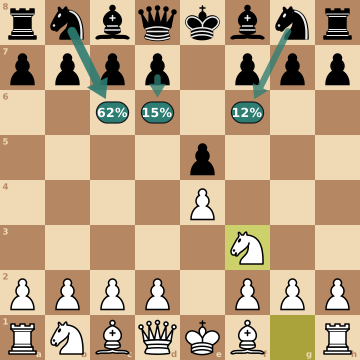
- 2...Nc6 (62%). Nc6 develops and protects e5 at the same time.
Your answer: 3. d4. The Scotch: hit e5 right now instead of building up slowly. - 2...d6 (15%). d6 protects e5 with a pawn instead of a knight.
Your answer: 3. Nc3. Develop and protect e4 first. d4 comes next. - 2...Nf6 (12%). Nf6 ignores the threat to e5 and attacks your e4 pawn instead.
Your answer: 3. Nc3. Protect e4 by developing.
After 1. e4 e5 2. Nf3 Nc6 3. d4
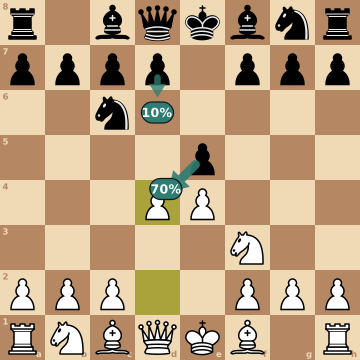
- 3...exd4 (70%). Black gives up the pawn's place in the center, and you get to recapture.
Your answer: 4. Nxd4. Take back with the knight, right in the center. - 3...d6 (10%). Black holds e5 with d6 instead of taking.
Your answer: 4. Nc3. Develop and protect e4, and keep the pressure on e5.
After 1. e4 e5 2. Nf3 Nc6 3. d4 exd4 4. Nxd4
The key position of the Scotch. Your knight on d4 is attacked once and defended once. Every reply below either trades it, attacks it again, or goes after your e4 pawn.
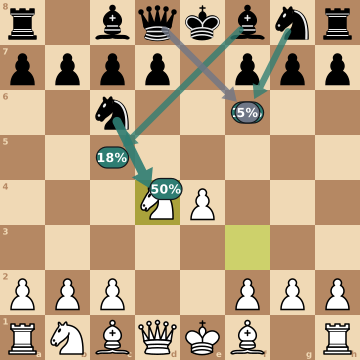
- 4...Nxd4 (50%). It looks simple, but it brings your queen to the center with nothing left to chase it.
Your answer: 5. Qxd4. Your queen takes over the center. - 4...Bc5 (18%). Your knight on d4 is now attacked twice (bishop and knight) and defended only once by the queen.
Your answer: 5. Be3. Develop and defend the knight at the same time. - 4...Nf6 (11%). Black develops the knight to f6 and attacks e4.
Your answer: 5. Nc3. Protect e4 by developing another piece. - 4...Qf6 (5%). It's only defended once, by your queen, so you need to act.
Your answer: 5. Be3. Defend the knight and develop.
After 1. e4 e5 2. Nf3 Nc6 3. d4 exd4 4. Nxd4 Nxd4 5. Qxd4
Your queen has come to the center early, which is usually risky. Here it's fine, because Black's c6 knight is gone and only ...c5 can kick it, at a real cost.
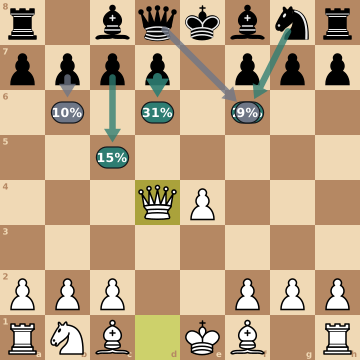
- 5...d6 (31%). It's solid, but it's a pawn move rather than a developing move, and you're already ahead in development.
Your answer: 6. Nc3. Develop and protect e4. - 5...Nf6 (24%). Nf6? looks natural, but it lets your e-pawn chase the knight with gain of time.
Your answer: 6. e5. Kick the knight. It has almost nowhere to go. - 5...c5 (15%). c5? kicks your queen, but it costs Black a lot: the d-pawn loses its c-pawn support, and d5 becomes a square no black pawn can ever attack again.
Your answer: 6. Qe3. Step back and keep the queen central. - 5...b6 (10%). b6? spends a move on a pawn when Black is already behind in development.
Your answer: 6. Nc3. Bb7 arrives. - 5...Qf6 (9%). Black offers a queen trade with Qf6.
Your answer: 6. e5. Kick the queen instead of trading.
After 1. e4 e5 2. Nf3 Nc6 3. d4 d6 4. Nc3
Black kept a pawn on e5. Don't rush to release the tension. If Black pins with ...Bg4, pin back with Bb5.
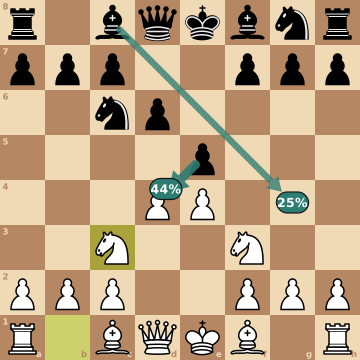
- 4...exd4 (44%). Black releases the tension and you get a free, central position.
Your answer: 5. Nxd4. Recapture with the knight, not the queen. - 4...Bg4 (25%). But Black's own knight on c6 can be pinned too.
Your answer: 5. Bb5. Pin the c6 knight to Black's king.
After 1. e4 e5 2. Nf3 d6 3. Nc3
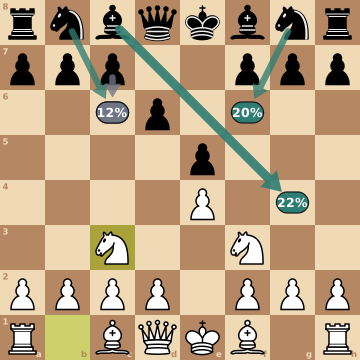
- 3...Bg4 (22%). Bg4? develops, but it leaves e5 short of defenders.
Your answer: 4. d4. Hit e5 now, while Black's bishop is off on g4. - 3...Nf6 (20%). Black develops Nf6 and attacks e4.
Your answer: 4. d4. Challenge e5 and grab the center. - 3...Nc6 (15%). Black develops Nc6 to support e5.
Your answer: 4. d4. Hit e5, reaching a position you already know. - 3...c6 (12%). d5, but it doesn't develop a piece and takes the c6 square from Black's knight.
Your answer: 4. d4. d5 in.
After 1. e4 e5 2. Nf3 Nf6 3. Nc3
You've sidestepped the Petrov with 3.Nc3. Watch for 3...Bc5, which simply leaves the e5 pawn hanging.
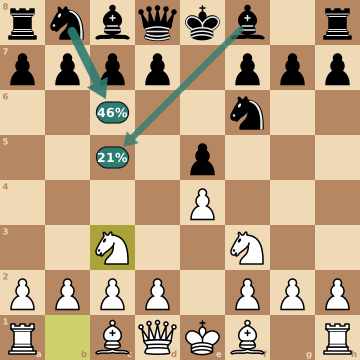
- 3...Nc6 (46%). Black develops Nc6. This is the Four Knights Game.
Your answer: 4. d4. Strike the center, Scotch style. - 3...Bc5 (21%). Bc5? looks natural, but nothing protects the e5 pawn now.
Your answer: 4. Nxe5. Take the free pawn.
Your plan after the opening
After 4...Nxd4: queen in the center, castle long
Against the most common line, develop with Nc3 and Bf4, then castle queenside so a rook lands on the d-file at once. Play f3 to make e4 rock-solid and put the king on b1. Later you can push g4 and h4 to attack on the kingside. Stockfish rates you clearly better in the main line, by a bit more than a pawn.
1. e4 e5 2. Nf3 Nc6 3. d4 exd4 4. Nxd4 Nxd4 5. Qxd4 d6 6. Nc3 Nf6 7. Bf4 Be7 8. O-O-O O-O 9. f3 Be6 10. Kb1
Against the Classical 4...Bc5: Be3, then c3
Defend the knight with 5.Be3. If Black adds a third attacker with 5...Qf6, add a third defender with 6.c3. Then develop with Bc4 and castle kingside. If Black's queen goes to g6 to hit e4 and g2, cover e4 with Qf3 or Qd3, and keep an eye on Nb5, aiming for a fork on c7.
If Black answers 5.Be3 with 5...Nf6?, then 6.Nxc6 opens the line from your e3 bishop to the undefended bishop on c5, and you win material.
1. e4 e5 2. Nf3 Nc6 3. d4 exd4 4. Nxd4 Bc5 5. Be3 Qf6 6. c3 Nge7 7. Bc4 O-O 8. O-O
Against 4...Nf6: the Scotch Four Knights
Protect e4 with 5.Nc3. If Black trades on d4 now, recapture with the queen and you're back in the main-line plan: Bf4, O-O-O and f3. If Black pins your knight with 5...Bb4, take on c6, then develop with Bd3 and castle. The position is healthy and roughly level.
1. e4 e5 2. Nf3 Nc6 3. d4 exd4 4. Nxd4 Nf6 5. Nc3 Bb4 6. Nxc6 bxc6 7. Bd3
Against 2...d6 and 2...Nf6: Nc3 first, then d4
Here you develop the queen's knight to protect e4, and push d4 on the next move. Against the Philidor you get more space and an easy position with Be3 or Bf4, Qd2 and castling. Against 2...Nf6 3.Nc3 Nc6, the same 4.d4 leads back to Scotch positions you already know.
1. e4 e5 2. Nf3 d6 3. Nc3 Nf6 4. d4
Traps and common mistakes
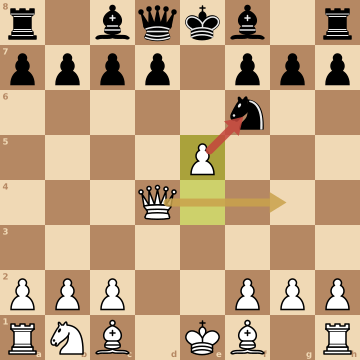
Black's most common slip: 5...Nf6? 6.e5!
1. e4 e5 2. Nf3 Nc6 3. d4 exd4 4. Nxd4 Nxd4 5. Qxd4 Nf6 6. e5
After the knight trade, 5...Nf6 looks like the most natural move in chess, and 24% of players choose it. But 6.e5 leaves the knight almost nowhere to go. On d5, e4 or g4 your queen simply takes it, and on h5 it gets trapped by g4. That leaves the sad retreat to g8.
Against 5...Nf6, 6.e5 wins 61% of games for White at this level. Stockfish rates you about two pawns ahead.
Losing the d4 knight in the Classical
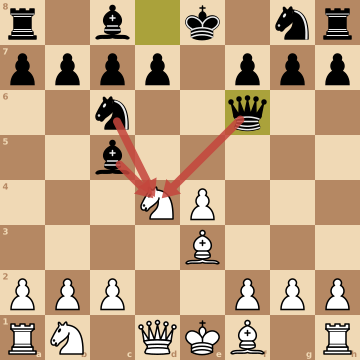
1. e4 e5 2. Nf3 Nc6 3. d4 exd4 4. Nxd4 Bc5 5. Be3 Qf6 6. Nc3?? Nxd4 7. Bxd4 Bxd4
After 5...Qf6 your knight on d4 is attacked three times: by the c6 knight, the c5 bishop and the queen. It's defended only twice. The developing move 6.Nc3?? adds nothing to d4, and Black wins a piece. Play 6.c3 instead, so three defenders meet three attackers.
Asking the bishop with h3 after 3...d6
1. e4 e5 2. Nf3 Nc6 3. d4 d6 4. Nc3 Bg4 5. Bb5
When Black holds e5 with 3...d6 and pins your knight with 4...Bg4 (25% of games), the reflex is 5.h3. That's a mistake: after 5...Bxf3 your d4 pawn loses a defender, and Black wins it with ...Nxd4.
Pin back with 5.Bb5. With ...d6 played, the c6 knight can't move without exposing Black's king, and d5 threatens to win it. Stockfish rates you about a pawn better.
Recapturing with the wrong piece on d4
After 3...d6 4.Nc3 exd4, take back with the knight. 5.Qxd4?? walks into ...Nxd4 and loses the queen, because the c6 knight is still on the board. The queen only belongs on d4 once Black has traded that knight off.
Missing the free pawn after 2...Nf6 3.Nc3 Bc5?
1. e4 e5 2. Nf3 Nf6 3. Nc3 Bc5 4. Nxe5
About 21% of players develop the bishop here and forget that nothing protects e5 any more. Take it with 4.Nxe5. Black's tricks don't work: 4...Nxe4 5.Nxe4 or 4...Bxf2+ 5.Kxf2 just loses a piece. Stockfish rates you about a pawn better.
Frequently asked questions
Is the Scotch Game good for beginners?
Yes, especially for players who like open games. The ideas are simple (take on d4, develop, count attackers and defenders), and at 900 to 1800 the most common reply, 4...Nxd4, lets your queen take over the center. You don't need much theory to get a good position.
What is the most common reply to the Scotch Game at club level?
At 900 to 1800 on Lichess, 70% of players answer 3.d4 with 3...exd4, and after 4.Nxd4 half of them trade knights with 4...Nxd4. The Classical 4...Bc5 comes next at 18%.
What should White play against 4...Bc5 in the Scotch?
This guide recommends 5.Be3. Against 4...Bc5, 5.Be3 wins 54% of games for White at this level, compared with 47% for the more popular 5.Nxc6. If Black plays 5...Qf6, follow up with 6.c3, never 6.Nc3.
Should I play the Scotch or the Italian Game?
Both are good at club level. The Scotch opens the center on move three and gives you clear plans with early piece play, often with queenside castling. The Italian keeps more tension and leads to slower positions. If you like direct, open games, the Scotch is the better fit.
What if Black doesn't play 2...Nc6?
At this level 15% of players choose 2...d6 and 12% choose 2...Nf6. Against both, this guide plays 3.Nc3 to protect e4, then d4 on the next move. Against 2...Nf6 3.Nc3 Bc5?, take the free pawn with 4.Nxe5.
Keep learning
- All 36 opening guides: every opening on the site, grouped by what you play as White and Black.
- Is the Scotch Game Good for White?: A closer look at 3.d4, Black's replies and why the Scotch needs less theory than the Ruy Lopez.
- The best chess openings for 1200 to 1800 players: Where the Scotch fits among the openings that cover the whole intermediate range.
The Coach plays the Scotch Game against you with the moves 900 to 1800 players actually choose, including 4...Nxd4 and the Classical, and explains every move in plain English. Progress tracking is free during the open beta.
Practice the Scotch Game free →