Stalemate in Chess: What It Is and How to Avoid It
TL;DR
In one sentence Stalemate: the player to move has no legal move and is not in check. The game is a draw. Result A draw: half a point each, however much material either side has Checkmate vs stalemate No legal moves in both; in check means checkmate, not in check means stalemate Who it hurts The player who is winning. It's the classic way to throw away a won game. How to avoid it When far ahead, check that your opponent still has a move before every move you make
What stalemate is
Stalemate happens when it's a player's turn, their king is not in check, and they have no legal move with any piece. Since they can't move and aren't being checkmated, the game ends in a draw.
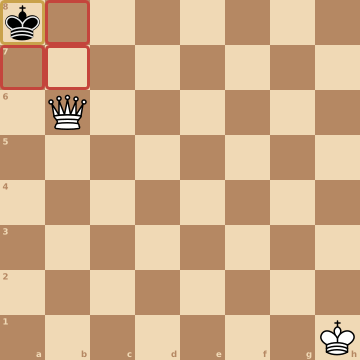
White has a whole queen more and still only gets a draw. This is the most common stalemate there is: the stronger side boxes the king in with the queen and forgets to leave it a square.
Stalemate vs checkmate
The two look alike, because in both the player to move can't make a legal move. The only difference is check.
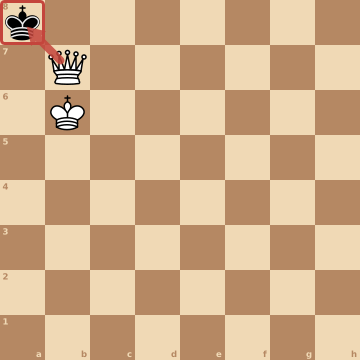
| Checkmate | No legal move and in check. The player who is mated loses. |
| Stalemate | No legal move and not in check. The game is a draw. |
So in the first diagram, White went wrong by taking away the king's last square too early. The right plan is to leave Black's king a little room, walk the white king over, and only then give mate with the queen, as in the second diagram.
The rook pawn trap
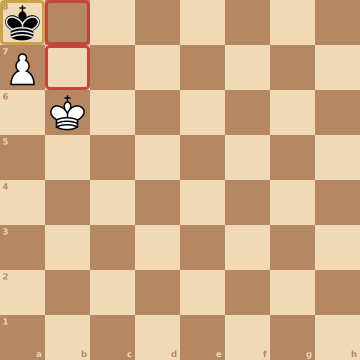
With a pawn on the a-file or h-file (a "rook pawn"), the defending king can often hide in the corner in front of it. The attacker pushes the pawn, the defending king runs out of squares, and the game is drawn. It's one of the first endgame lessons every player learns, usually the hard way.
Stalemate as a defense
For the side that is losing, stalemate is a lifeline. When you have only a king and a few blocked pawns left, look for ways to get rid of your last movable pieces: offering a rook that can't be refused, or a "desperado" piece that keeps giving check. If your opponent has to take it and you then have no legal move, it's a draw.
How to avoid stalemate
- Count your opponent's moves. When you're far ahead, check before every move that your opponent will still have at least one legal move afterward.
- Give the king room. With a queen against a lone king, stay a knight's move away from the king, not right beside it, until your own king comes to help.
- Bring your king. Most basic mates need your king's help. Bring it close before you go for the final check.
- Watch blocked pawns. An opponent with only a king and pawns that can't move is one quiet move away from stalemate.
- Consider underpromotion. Very rarely, making a rook instead of a queen is the only way to avoid stalemate.
Practice it
Our endgame puzzles come from real games and train exactly this: finishing a winning position without letting it slip. You can also drill checkmate puzzles to make the finishing pattern automatic. Related reading: zugzwang, where you do have moves but they're all bad, and our chess terms glossary.
FAQ
What is stalemate in chess?
Stalemate is a position where the player whose turn it is has no legal move, and their king is not in check. The game ends immediately in a draw.
Is stalemate a win or a draw?
A draw. Each player gets half a point, no matter how much material one side has. That's why stalemate is the classic way to throw away a won game.
What is the difference between stalemate and checkmate?
In both, the player to move has no legal move. In checkmate the king is in check, so that player loses. In stalemate the king is not in check, so the game is a draw.
Is stalemate the same as a draw by repetition?
No. They are both draws, but for different reasons. Stalemate is about having no legal move. A draw by threefold repetition happens when the same position appears three times with the same player to move.
How do you avoid stalemate?
When you are far ahead, especially when your opponent has only a king left, check before every move that your opponent will still have at least one legal move. Give the king some room, and checkmate it rather than boxing it in.
Endgame puzzles from real games teach you to convert a winning position, cleanly and without stalemate.
Try the endgame puzzles →