What Is a Skewer in Chess? How It Works, With Examples
TL;DR
In one sentence A skewer attacks a valuable piece, and when it moves out of the way, you win the piece standing behind it. Who can skewer Bishops, rooks and queens: the pieces that attack along straight lines Strongest kind An absolute skewer, with check: the king must move Skewer vs pin Skewer: the bigger piece is in front. Pin: the smaller piece is in front. Where it happens most Endgames and open positions, where long lines are clear
What a skewer is
Picture a kebab skewer going through two pieces of meat on the same line. In chess, a skewer is a long-range attack that goes through one piece to hit another behind it.
The key is the order. The piece in front is the more valuable one (often the king or the queen). It's attacked, so it has to move. And when it steps aside, the line opens and you capture the piece that was hiding behind it.
A rook skewer
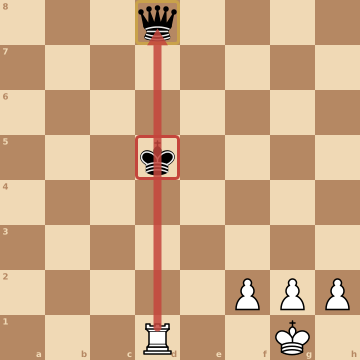
White has just played Rd1+. Black's king is in check and must step off the d-file. As soon as it does, the d-file is open and White plays Rxd8, winning the queen for nothing. The king can't help: none of the squares it can reach is next to d8.
This is an absolute skewer: the piece in front is the king, so moving it isn't optional.
A bishop skewer
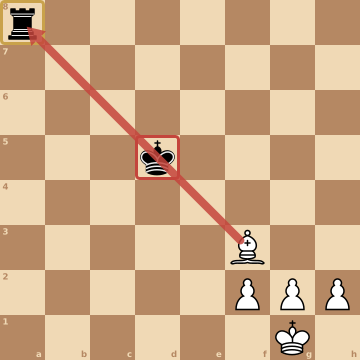
Same idea on a diagonal. The bishop checks the king on d5, the king has to leave the diagonal (it can't go to c6, which is still on the same line), and then Bxa8 wins the rook. A bishop for a rook, plus a free move: that's usually a winning endgame.
Skewer vs pin: the easy way to remember
A skewer and a pin look the same at first: a bishop, rook or queen attacking two enemy pieces on one line. The difference is which piece is in front.
| Pin | The smaller piece is in front. It can't move (or shouldn't), because the bigger piece behind it would be exposed. The attacker keeps the pressure on. |
| Skewer | The bigger piece is in front. It has to move, and the smaller piece behind it is lost. |
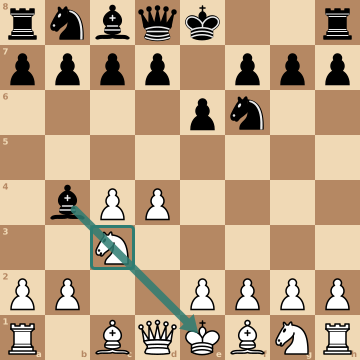
One way to remember it: in a pin the small piece is stuck; in a skewer the big piece is chased away.
How to use skewers (and avoid them)
- Look for lined-up pieces. Any time two enemy pieces share a rank, file or diagonal, ask whether one of your bishops, rooks or queen can attack along that line.
- Check first. The best skewers start with check, because the king has no choice.
- In endgames, watch your king and rook. Most skewers happen late in the game, when lines are open. Keep your king off the same line as an undefended rook or queen.
- Don't line up your king and queen. It's the classic mistake. If they share a diagonal, an enemy bishop can skewer them; on a file or rank, a rook can.
Practice it
Skewers are easiest to learn by seeing them over and over. Our skewer puzzles come from real games and are sorted easiest first. For related tactics, see forks and pins, and for a way to set up your bishop on a long diagonal, see the fianchetto.
FAQ
What is a skewer in chess?
A skewer is an attack on a valuable piece that has a less valuable piece standing behind it on the same line. When the valuable piece moves out of the way, you capture the piece behind it.
What is the difference between a pin and a skewer?
It's about which piece is in front. In a pin, the less valuable piece is in front and can't (or shouldn't) move because a more valuable piece is behind it. In a skewer, the more valuable piece is in front and has to move, exposing the piece behind it.
Which pieces can skewer?
Only the long-range pieces: bishops, rooks and queens, because a skewer works along a straight line (a rank, a file or a diagonal). Knights, pawns and kings can't skewer.
What is an absolute skewer?
A skewer where the piece in front is the king. Because the king is in check, it must move, so the piece behind it is lost unless the check can be blocked or the attacker captured.
How do I avoid being skewered?
Don't line up your king and queen, or your king and an undefended rook, on the same rank, file or diagonal when an enemy bishop, rook or queen could reach that line. This happens most often in endgames, when the board is open.
Our puzzles come from real games, grouped by theme, so you see the same patterns again and again until they stick.
Try 568 skewer puzzles →