The Most Reliable 1.d4 Defenses for Black
TL;DR
- Short answer: for a solid game at any level, play the Slav (700 to 1700 Elo) or the Queen's Gambit Accepted (900 to 1800). If you want to fight for the initiative from move one and you're 1400 or higher, the King's Indian or Nimzo-Indian.
- Nine 1.d4 defenses for Black, each with its own trainer built from what players at its rating range actually play on Lichess, with every one of your moves checked by Stockfish.
- The datasets range from about 1.0 million games (Bogo-Indian) to about 183 million (King's Indian, the largest on the whole site).
- Every defense below now comes with real move frequencies from its own rating band, so you can see which White systems you'll actually meet.
- "Reliable" means well-tested and sound, not a claim about win rate. Where we quote a Lichess result, it's for one specific line and rating band, exactly as it appears in our data.
Nine Real Options, Not One
1.d4 gets less attention than 1.e4 in most beginner-facing content, despite being played just as often at the top level. This site covers nine Black responses to it, spanning solid structures (Slav), sharp counter-attacks (Grünfeld, Benko), and flexible, hypermodern setups (Queen's Indian, Bogo-Indian). Each trainer is built from the moves players at its recommended rating range actually choose on Lichess, so the lines you practice are the ones you'll meet.
King's Indian Defense
Recommended range: 1400 to 2200 Elo · Lichess games behind this trainer: about 183 million · Style: Aggressive, flexible
The largest single dataset on this entire site, larger than any other opening, White or Black. Black lets White build a full classical center, then attacks it later with pieces and pawn breaks rather than contesting it immediately.
1. d4 Nf6 2. c4 g6
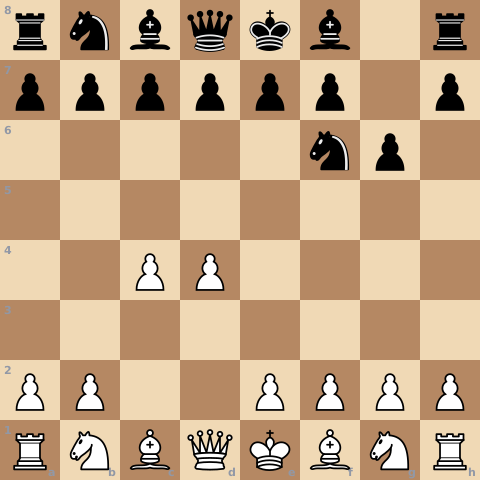
Black fianchettoes the bishop early (developing the bishop to g7 via g6) rather than staking a claim in the center right away. At 1400 to 2200 on Lichess, White answers 1...Nf6 with 2.c4 in 44% of games, 2.Nf3 in 18% and 2.Bf4 in 16%, so the trainer covers the Classical, Four Pawns and Saemisch after 2.c4 plus the London, Colle, Torre and fianchetto systems. One number worth knowing: the Saemisch (5.f3) is one of White's best-scoring systems at this level, with Black winning 44% of games after 5.f3.
Practice the King's Indian Defense interactively →
Nimzo-Indian Defense
Recommended range: 1400 to 2200 Elo · Lichess games behind this trainer: about 10.7 million · Style: Positional
1. d4 Nf6 2. c4 e6 3. Nc3 Bb4
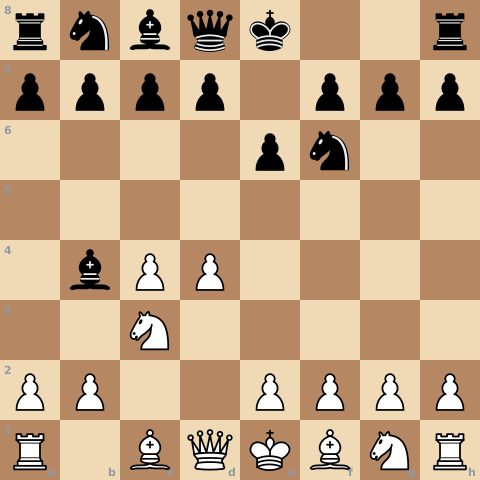
Black pins White's knight on c3 (moving the bishop from f8 to b4), fighting for control of e4 without ever committing a pawn there. At this rating range, 50% of players answer 3.Nc3 with 3...Bb4, and White's replies are spread out: 4.Qc2 (18%), 4.Nf3 (17%), 4.Bd2 (16%), 4.Bg5 (16%), 4.e3 (12%) and 4.a3 (10%). The trainer covers all six, with the same plan in almost every line: castle, then ...c5 and ...d5.
Practice the Nimzo-Indian Defense interactively →
Grünfeld Defense
Recommended range: 1800 to 2400 Elo · Lichess games behind this trainer: about 4.9 million · Style: Aggressive, flexible
The highest Elo floor of these nine defenses, and the sharpest in spirit: rather than slowly building toward a King's Indian-style structure, Black hands White the classical center immediately and attacks it right away.
1. d4 Nf6 2. c4 g6 3. Nc3 d5
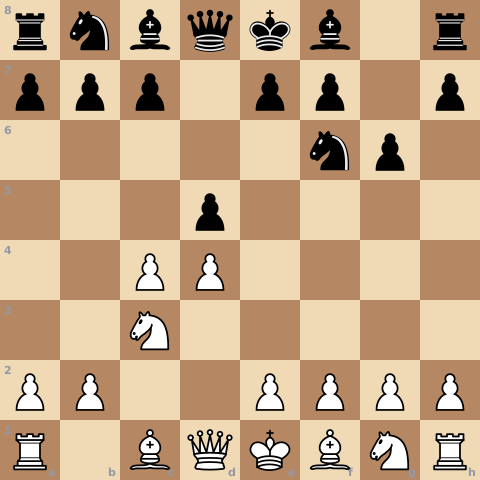
That immediate central strike (pushing the d-pawn two squares to challenge White's center directly) is what separates this from the King's Indian's more patient approach. At 1800 to 2400, 3...d5 is played in about 27% of games after 3.Nc3, and White answers with the Exchange 4.cxd5 (44%), 4.Nf3 (23%), 4.Bg5 (9%), 4.e3 (9%) or 4.Bf4 (6%). The trainer covers all five. Against 4.Bg5, the jump 4...Ne4 works well in practice: after 4.Bg5 Ne4 5.Nxe4 dxe4, Black wins 57% of games at this level on Lichess.
Practice the Grünfeld Defense interactively →
Dutch Defense
Recommended range: 1200 to 2000 Elo · Lichess games behind this trainer: about 16 million · Style: Aggressive
1. d4 f5
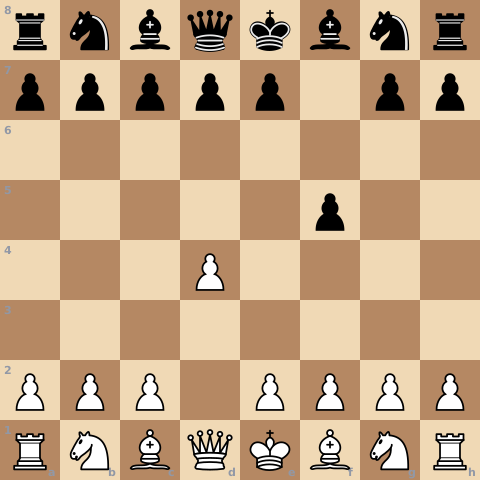
An immediate, ambitious grab of kingside space, pushing the f-pawn two squares on move one rather than developing normally first. It's rare at club level (about 2% of 1.d4 games at 1200 to 2000), so many opponents won't know it well. The trainer covers White's five main replies, 2.c4 (34%), 2.Bf4 (18%), 2.Nf3 (15%), 2.e3 (9%) and 2.Nc3 (8%), with the Classical ...e6 and ...Bb4 setup, a ...b6 plan against the London and the Leningrad against Nf3 systems. The Staunton Gambit and 2.Bg5, each about 3.5% of games, are not covered.
Practice the Dutch Defense interactively →
Slav Defense
Recommended range: 700 to 1700 Elo · Lichess games behind this trainer: about 26 million · Style: Solid, positional
The lowest Elo floor of these nine. Same philosophy as the Caro-Kann: support the center with a pawn rather than a piece, keeping the light-squared bishop free to develop before it can get boxed in.
1. d4 d5 2. c4 c6
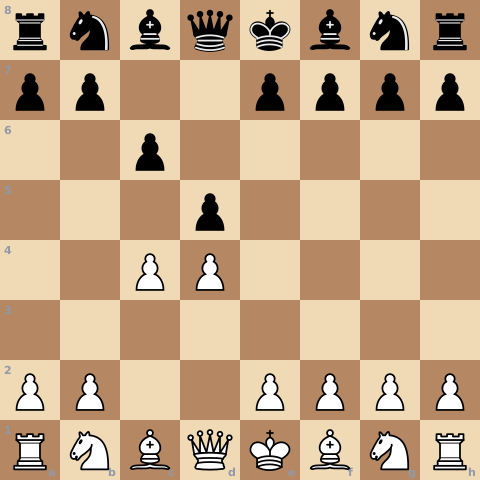
At 700 to 1700, only 34% of players actually play 2.c4 after 1.d4 d5. The rest choose 2.Bf4 (21%), 2.Nf3 (15%), 2.e3 (12%) or 2.Nc3 (9%), which is why this trainer also shows how the same ...c6, ...Nf6 and ...Bf5 setup works against those.
After 2. c4 c6, White's choice splits four ways: 3. Nc3 (51%), 3. Nf3 (16%), 3. e3 (12%) and the 3. cxd5 exchange (12%). After 3.Nc3 Nf6, the most common moves are 4.Nf3 (37%), 4.Bg5 (23%), 4.e3 (13%) and 4.Bf4 (10%). That's not a small tail: a Slav player ready only for one system would be caught out in most games.
Practice the Slav Defense interactively →
Queen's Gambit Accepted
Recommended range: 900 to 1800 Elo · Lichess games behind this trainer: about 41 million · Style: Flexible, positional
1. d4 d5 2. c4 dxc4
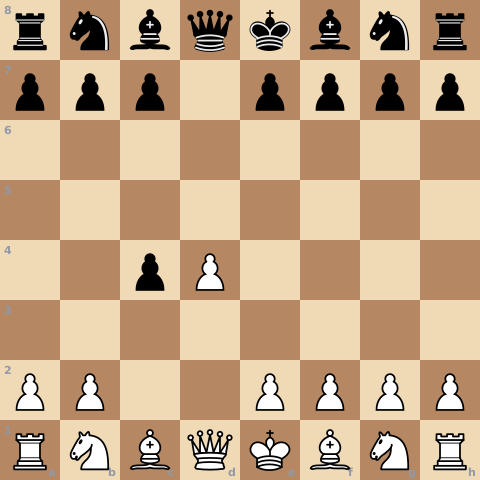
Black takes the offered pawn (the pawn on d5 captures White's pawn on c4) and gives it back later on Black's own terms, an active answer to 1.d4 played by several World Champions, including Alekhine, Smyslov and Kramnik. Chess theory doesn't really consider this a true gambit: the c4 pawn is either regained by White or can only be held by Black at a long-term cost.
At 900 to 1800 on Lichess, 2...dxc4 is the most popular reply to 2.c4 (31%), ahead of 2...e6 (23%). White's third move splits: 3. Nc3 (32%), 3. e3 (28%), 3. e4 (28%) and the classical 3. Nf3 (only 7%). The one thing not to do is cling to the pawn: after 3.e3 b5, White wins 63% of games at this level, compared with 54% after 3...Nf6.
Practice the Queen's Gambit Accepted interactively →
Queen's Indian Defense
Recommended range: 1400 to 2200 Elo · Lichess games behind this trainer: about 1.5 million · Style: Positional
A flexible, hypermodern answer to 1.d4 that fianchettoes the light-squared bishop and fights for the center with pieces rather than pawns.
1. d4 Nf6 2. c4 e6 3. Nf3 b6
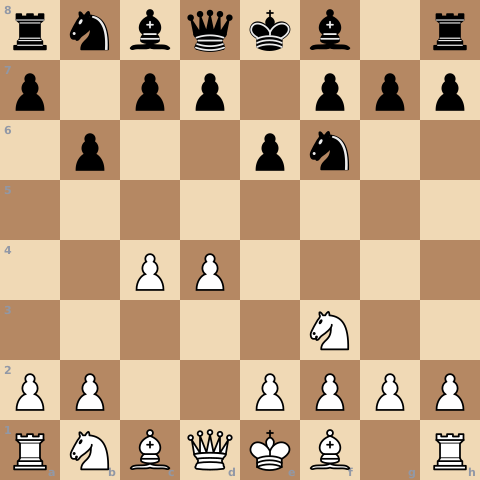
At 1400 to 2200, 18% of players answer 3.Nf3 with 3...b6, behind 3...d5 (43%) and 3...Bb4+ (19%). White's fourth move then splits almost evenly between 4. Nc3 (37%) and the fianchetto 4. g3 (35%), well ahead of 4. Bg5 (9%), 4. a3 (8%) and 4. e3 (6%). The trainer answers all of them with ...Bb7 and the fight for e4.
One trap comes up often: after 4.Nc3 Bb7 5.e4?, the e4 pawn simply drops to 5...Nxe4. The 43% of Black players who take win 56% of those games on Lichess.
Practice the Queen's Indian Defense interactively →
Benko Gambit
Recommended range: 1300 to 2100 Elo · Lichess games behind this trainer: about 3.4 million · Style: Aggressive
A durable pawn sacrifice that rips open the queenside files before White finishes developing.
1. d4 Nf6 2. c4 c5 3. d5 b5
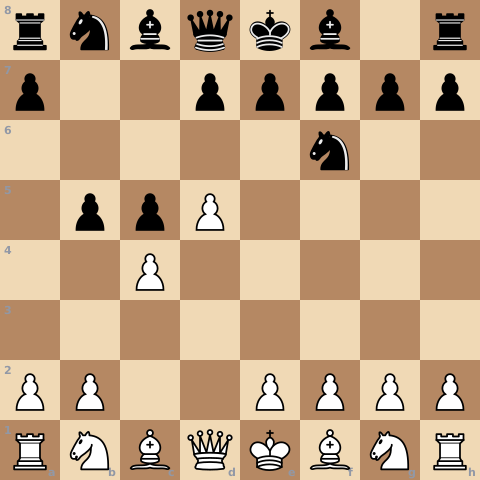
That queenside pawn offer (pushing the b-pawn two squares to offer material for open lines) is chosen by half of the players at 1300 to 2100 after 3.d5, and Black wins 52% of those games on Lichess. White accepts with 4. cxb5 in 51% of games, and after 4...a6, 48% take again with 5.bxa6. Many White players decline instead, and the trainer covers 4.b3, 4.e3 and 4.Nc3 as well as the accepted lines.
Practice the Benko Gambit interactively →
Bogo-Indian Defense
Recommended range: 1200 to 2000 Elo · Lichess games behind this trainer: about 1.0 million · Style: Positional, solid
A solid, flexible check that sidesteps the Nimzo-Indian's sharpest theory entirely.
1. d4 Nf6 2. c4 e6 3. Nf3 Bb4+
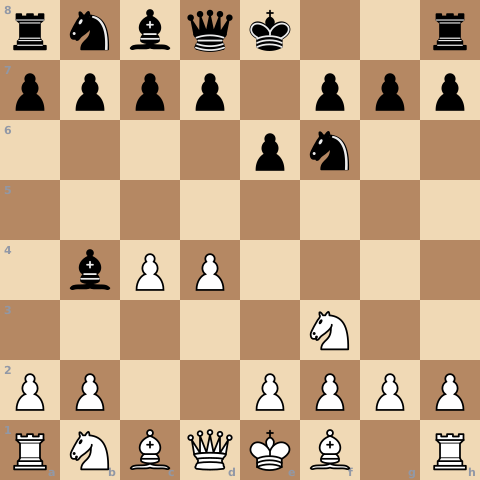
That bishop check (moving the bishop to b4 with check, since White hasn't played Nc3 yet to block it) is chosen by 19% of players at 1200 to 2000 after 3.Nf3. White's response splits three ways: 4. Bd2 (55%), 4. Nc3 (36%, which turns the game into a Nimzo-Indian) and 4. Nbd2 (9%). Against 4.Bd2, the trainer's 4...Qe7 does better in practice than the more common 4...Bxd2+: Black wins 47% of games with it on Lichess, against 43%.
Practice the Bogo-Indian Defense interactively →
Frequently asked questions
What is the best defense against 1.d4 for Black?
There's no single best choice. The Slav is the most practical all-round option (700 to 1700 Elo in our library), the Queen's Gambit Accepted is a solid alternative, and the King's Indian and Nimzo-Indian suit players from about 1400 who want more active positions.
What is the easiest defense against 1.d4 for beginners?
The Slav Defense, which starts at 700 Elo in our library. Black supports d5 with a pawn and keeps the light-squared bishop free, the same idea as the Caro-Kann against 1.e4.
Which 1.d4 defense has the most games in your data?
The King's Indian Defense, built from about 183 million Lichess games at 1400 to 2200, the largest single dataset on the site.
Go deeper: comparisons and plans
Not sure which of these to pick, or facing a particular White system? These guides go into the choices in detail:
- Should Black Accept or Decline the Queen's Gambit?: What really happens after 2...dxc4, and when the classical ...e6 suits you better.
- Slav vs Queen's Gambit Declined: Two ways to hold d5, and which one fits your style.
- King's Indian vs Grünfeld: The two big hypermodern defenses compared.
- Nimzo-Indian vs Queen's Indian vs Bogo-Indian: The ideas behind the Nimzo, and what to play when White avoids it with 3.Nf3.
- Is the Dutch Defense Good?: Stonewall, Leningrad and Classical, plus the early traps to avoid.
- How to Beat the London System as Black: Practical plans against the most popular system opening.
- London vs Torre vs Trompowsky: For the White side: which 1.d4 system to play.
- Is the Catalan Opening Good for Club Players?: For the White side: what the Catalan asks of you and who it suits.
- Is the Benko Gambit Sound?: Black's queenside pawn sacrifice, and why the pressure lasts.
- The London System's Real Weakness Is That It's Easy: The mistakes London players make when they stop reading the position.
Try Any of These for Free
All nine defenses above, and the full 36-opening library, are completely unlocked during this site's open beta. No card, no limit, no account required to start, just real, move-by-move practice lines built from the same data cited in this article, with your progress tracked for free if you create an account.
Every line checked the same way, against real game data, not against what sounds right.
Browse all 36 openings free →